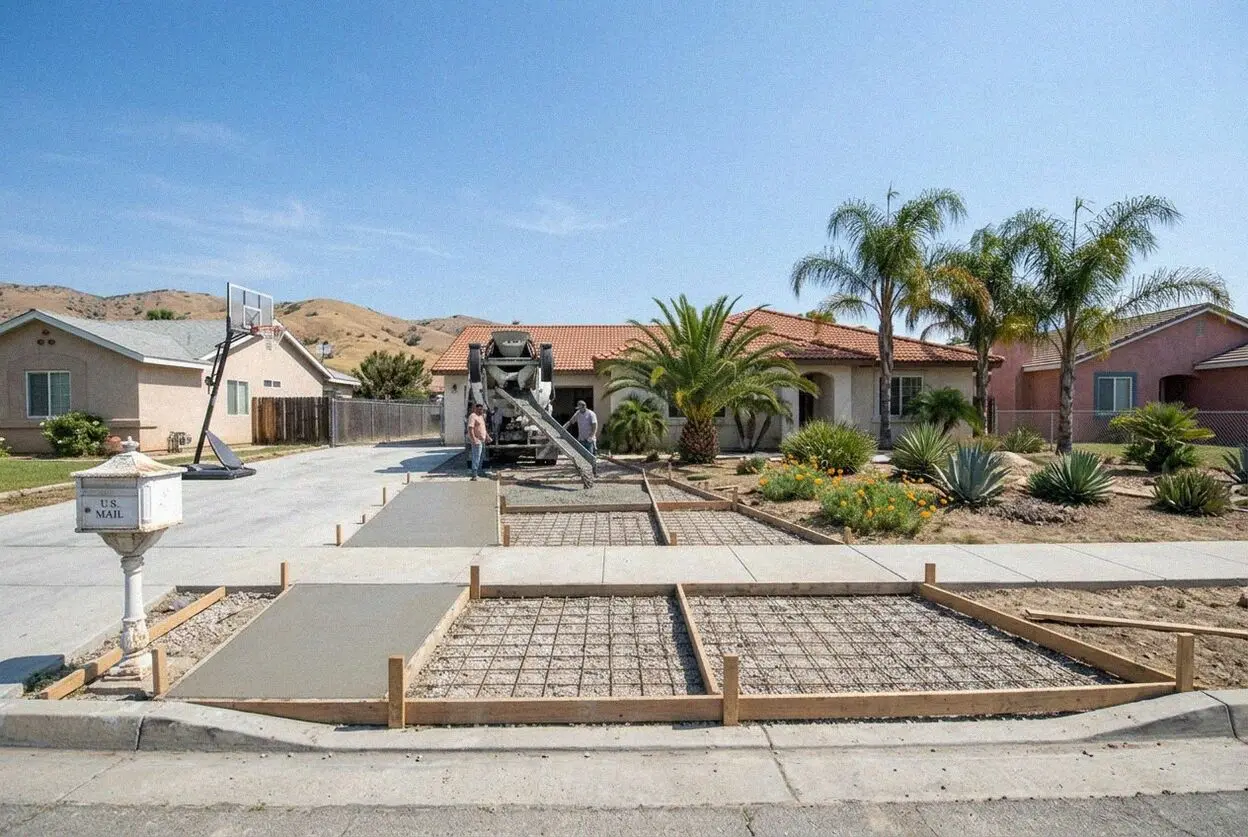
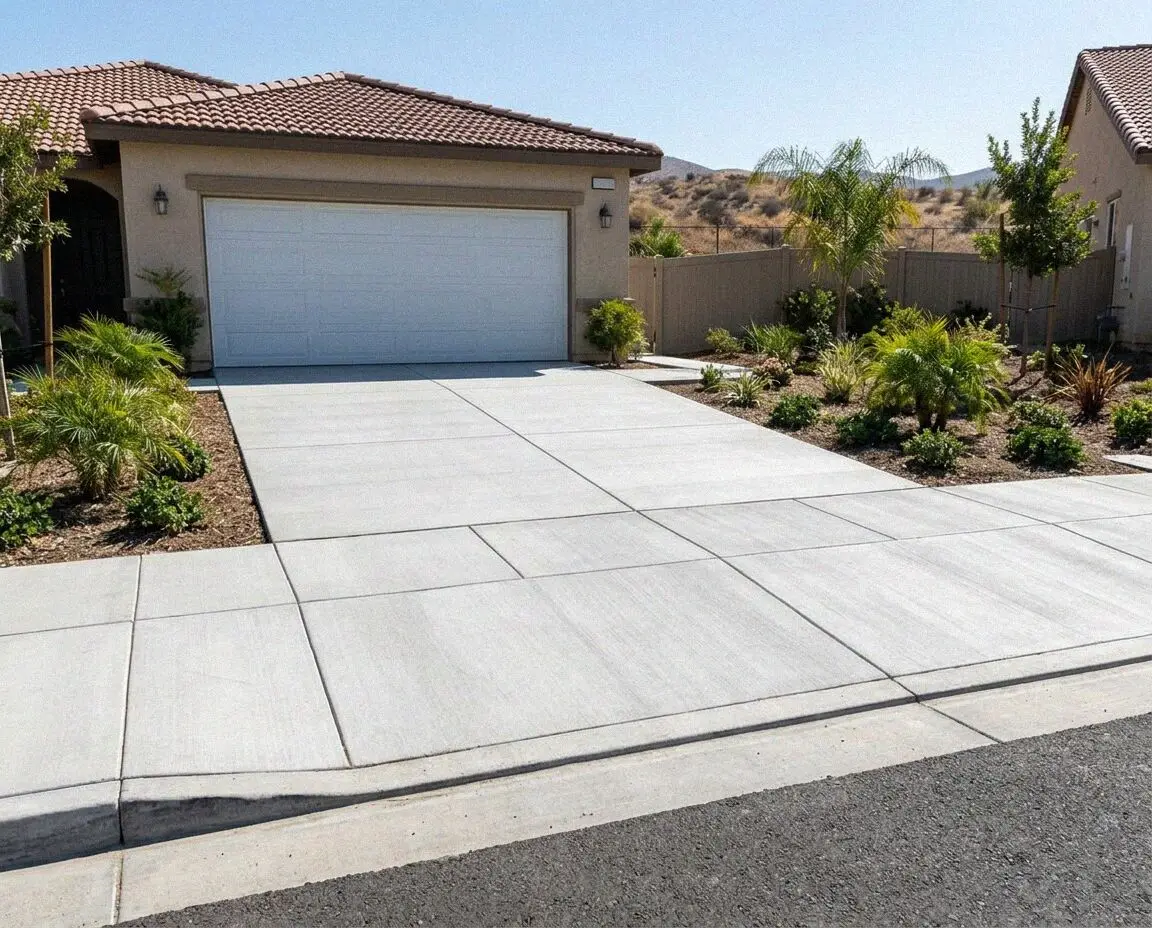
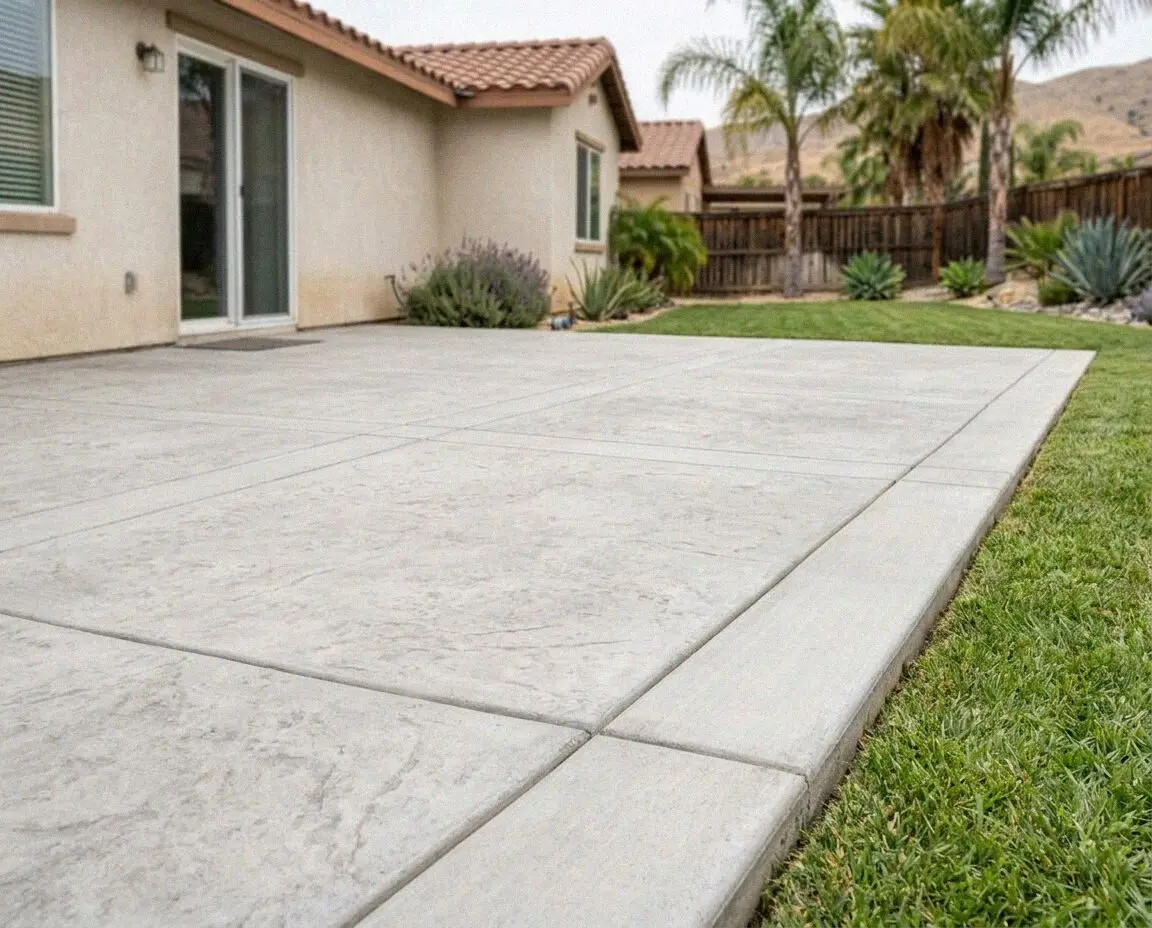
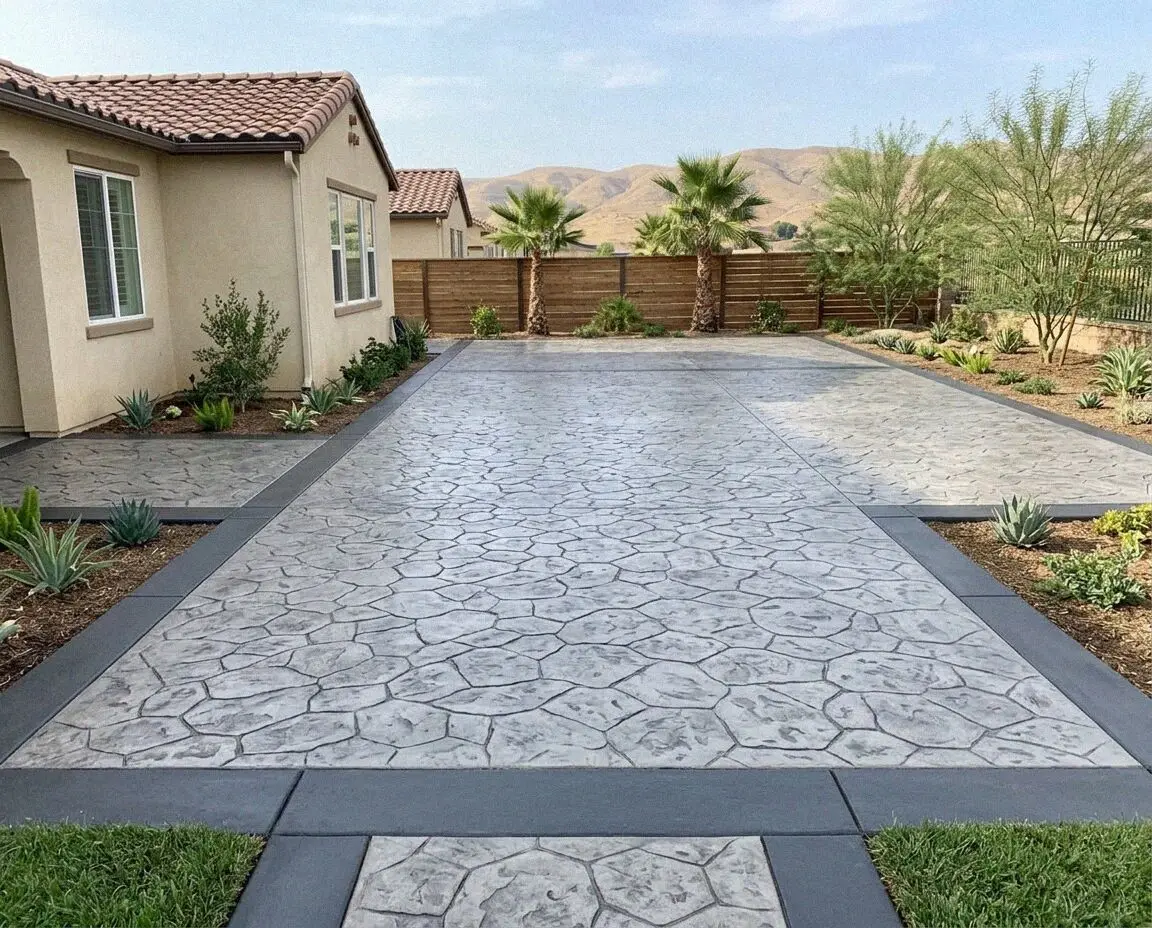
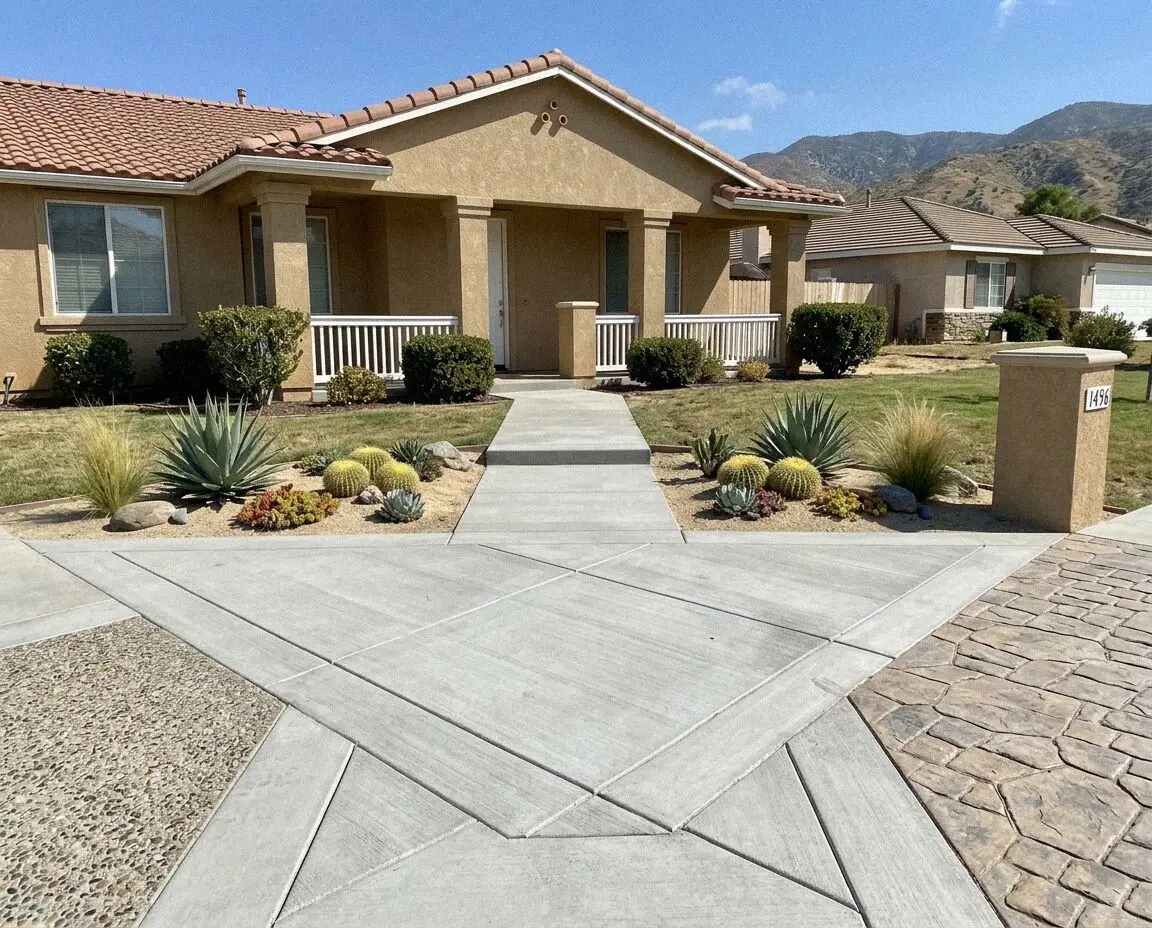
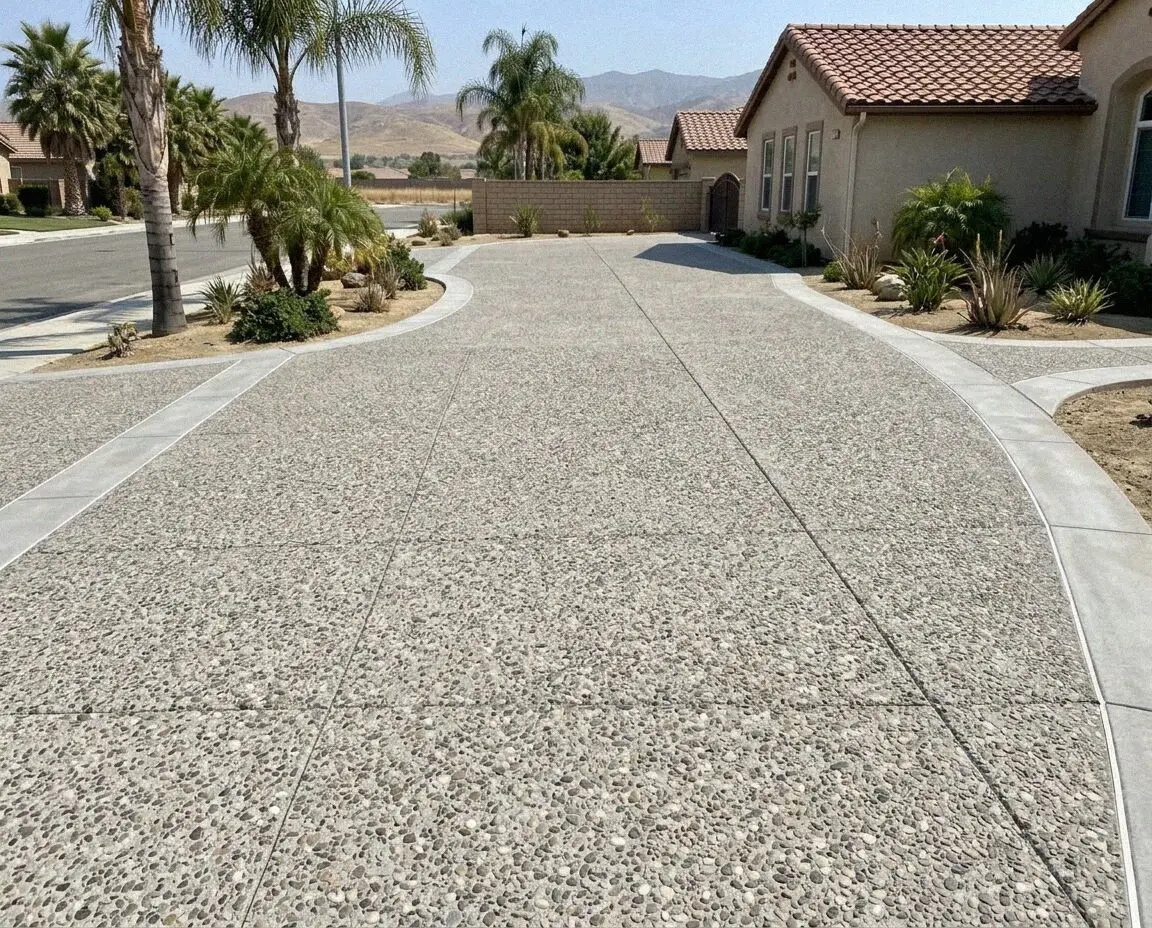
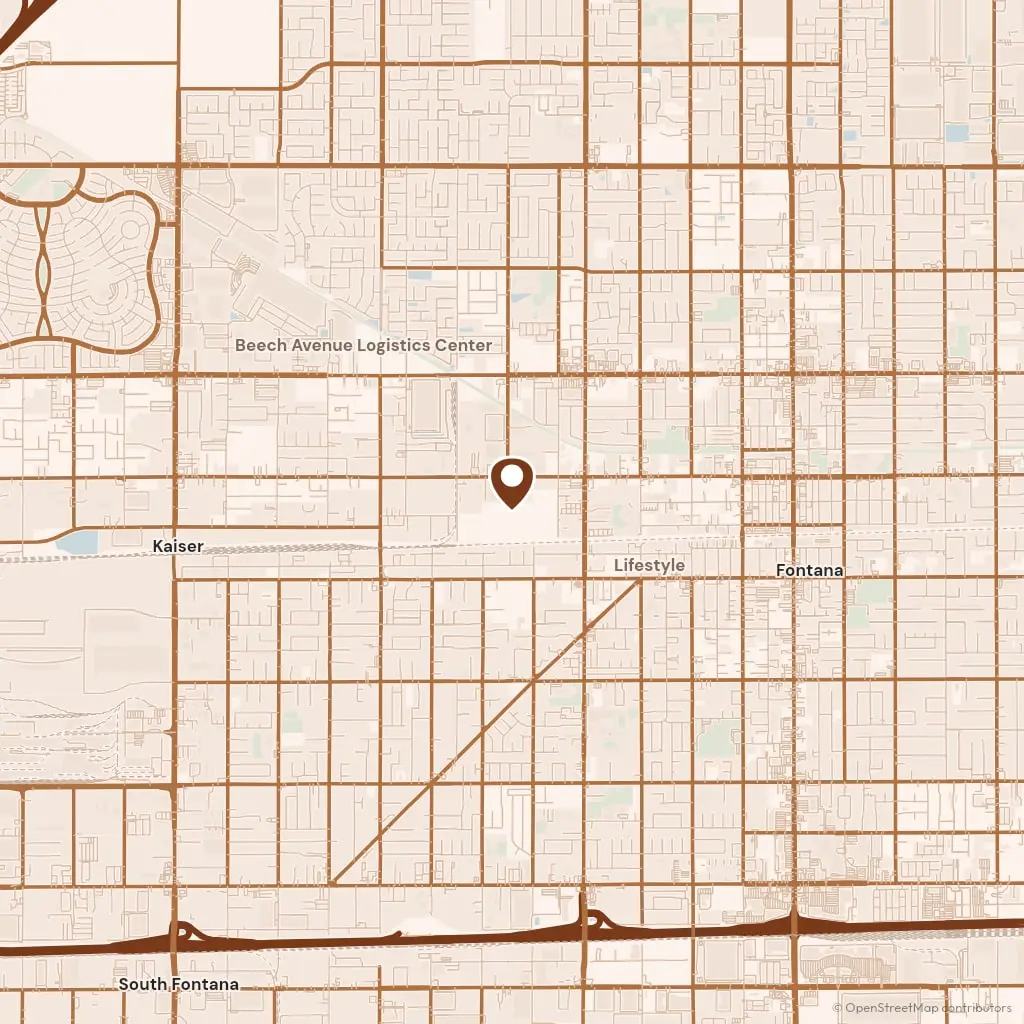
Our yard is in Fontana, straight west on Interstate 10, so a crew reaches Redlands in under half an hour at the Orange Street or Tennessee Street exit. Plans go to the City of Redlands building department in San Bernardino County. On the streets the city lists as historic we draw a drive or a front walk to match what is there rather than to what is quickest to pour, because a broom-finished apron in front of a Victorian on the south side is the one thing the street would notice.
The town grew in rings. Downtown along Orange Street and State Street, the University of Redlands and the streets south of the freeway are the 1880s to 1920s grove houses, Victorian and Craftsman, on deep lots with a drive that runs beside the house to a garage at the back. North of Interstate 10 the tracts went up after the Second World War on ground the groves had just left, with slab-on-grade houses and short front drives. East, toward Mentone, the housing is 1980s and later.
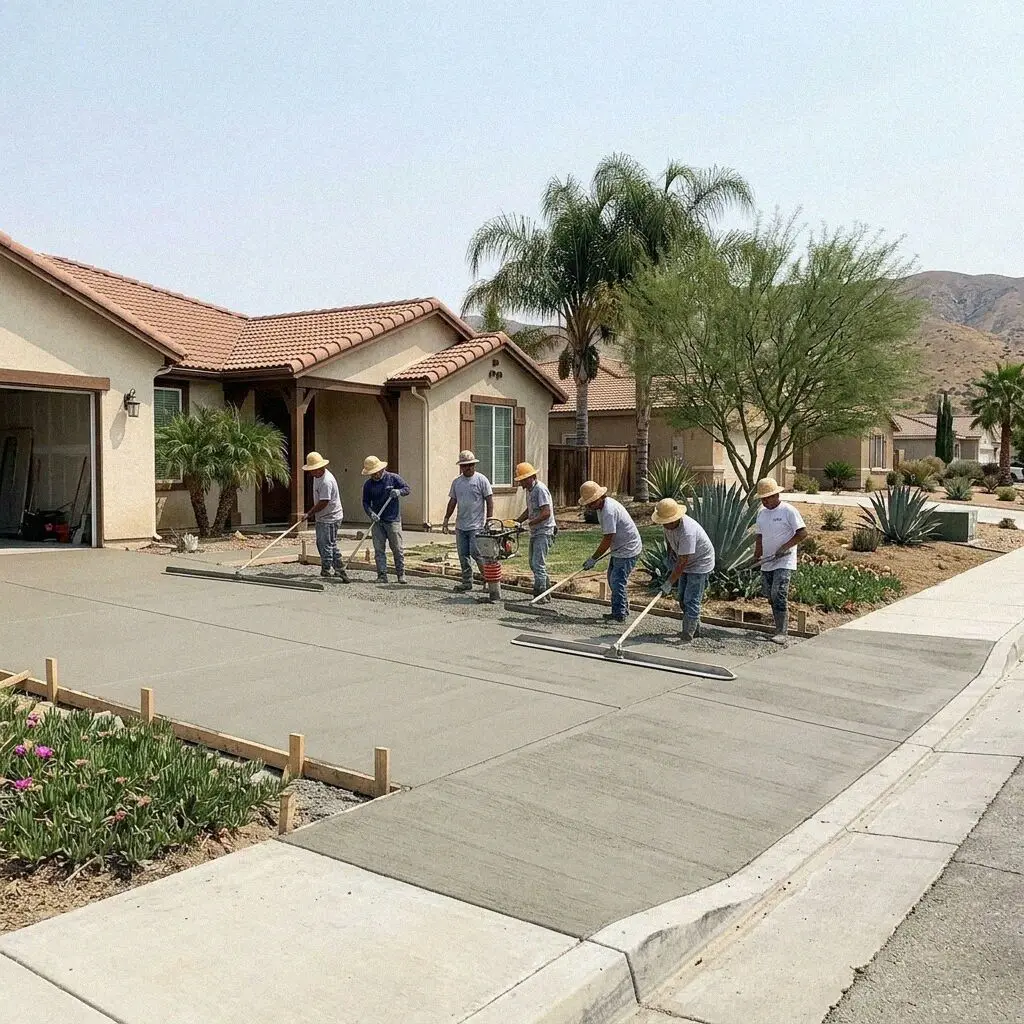
The mountains set the weather. Redlands sits below the San Bernardino Mountains where the wind comes down through the San Gorgonio Pass, so a fresh slab in autumn dries from the top before it cures underneath unless it is covered, and we cure every pour under a sheet. Winter brings the rain the clay holds and a few nights below freezing, which the groves once ran wind machines against, so we pour once the frost is off. Summer runs past 100 degrees and the pour starts at 6.