The height a Fontana door sits above its path was decided by which decade the street was built in, and the ground the steps stand on was dropped by a creek rather than laid down as clay.
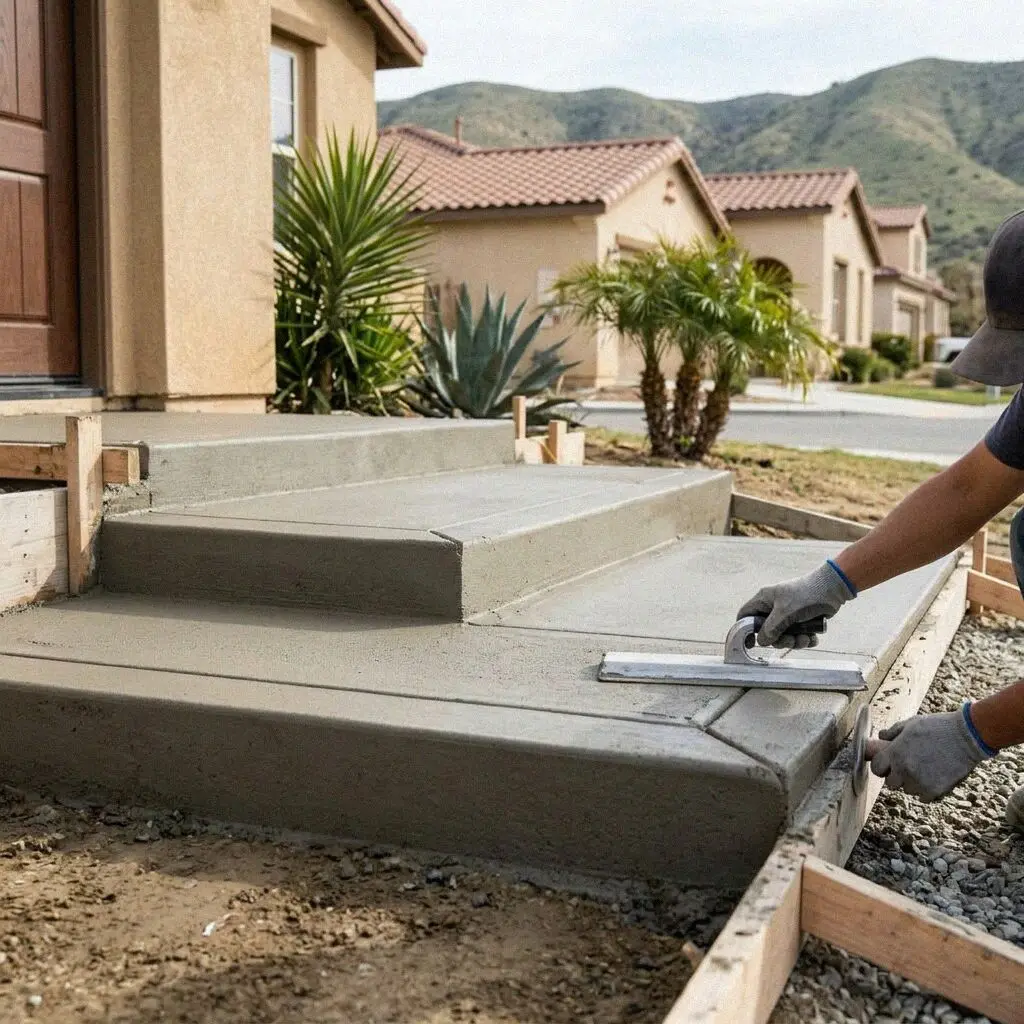
Lytle Creek spread sand, gravel and rounded stone across this valley floor and left it loose. A stair puts its whole weight onto a strip a foot wide, so it loads that ground far harder than a slab does, and rounded stone with nothing to key it simply rolls apart under the edge of a footing that stopped short. So the footing is dug past the loose material to something that reads firm on a probe, and the flight is cast as one piece with the footing rather than stood on top of it.
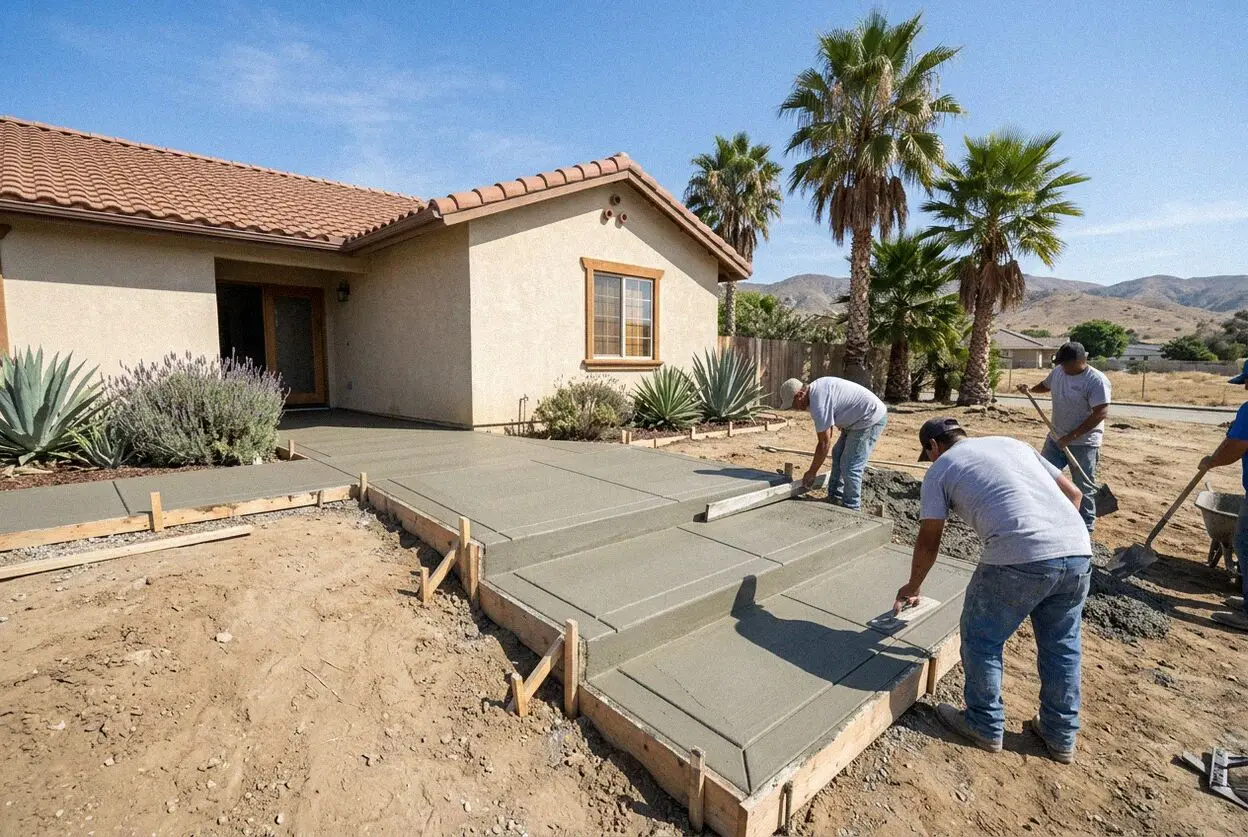
Then the street tells you what shape it is. On the mill blocks it is one or two risers at a slab-on-grade door, and the whole problem is that they were poured on dirt with no footing at all. In the newer tracts north of the 210 the drop from the garage slab into the house is deeper and wants two even risers and a landing rather than one tall one. On the Southridge hillside a flight runs to five or six, which brings in the handrail, and past 30 inches of drop at the side a guard as well.