Serving Fontana, CA and surrounding areas.(909) 555-0168
Fontana Concrete Pro

Concrete Patio Construction in Fontana, CA on a Base Screened Clear of Cobble

Fontana Concrete Pro pours patios 4 inches thick on graded base, jointed on a 10-foot grid, with post footings for a shade cover cast into the slab. Every estimate is measured and written on site.

Google reviewsFacebook reviewsBetter Business Bureau reviews5.0 Stars Rated by our customers · Google, Facebook and the BBB
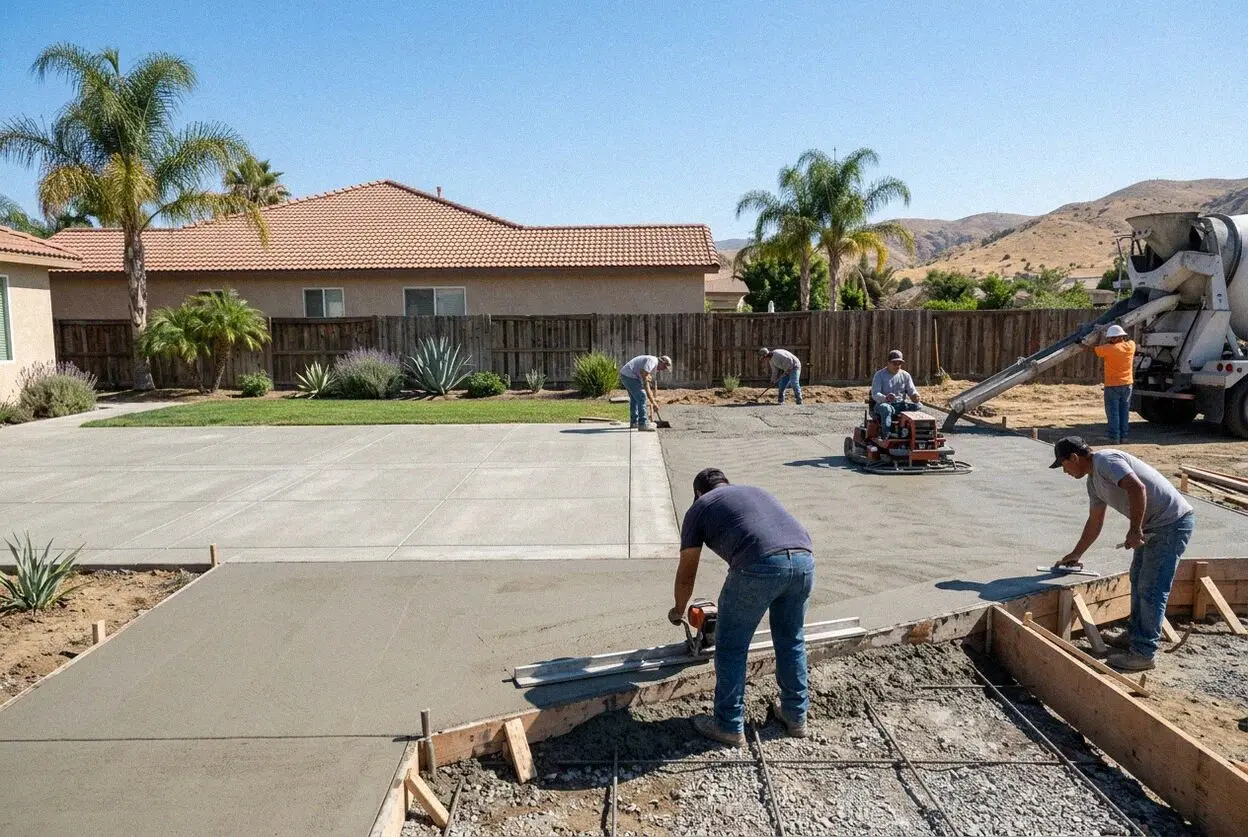
A concrete patio being floated behind a home in north Fontana
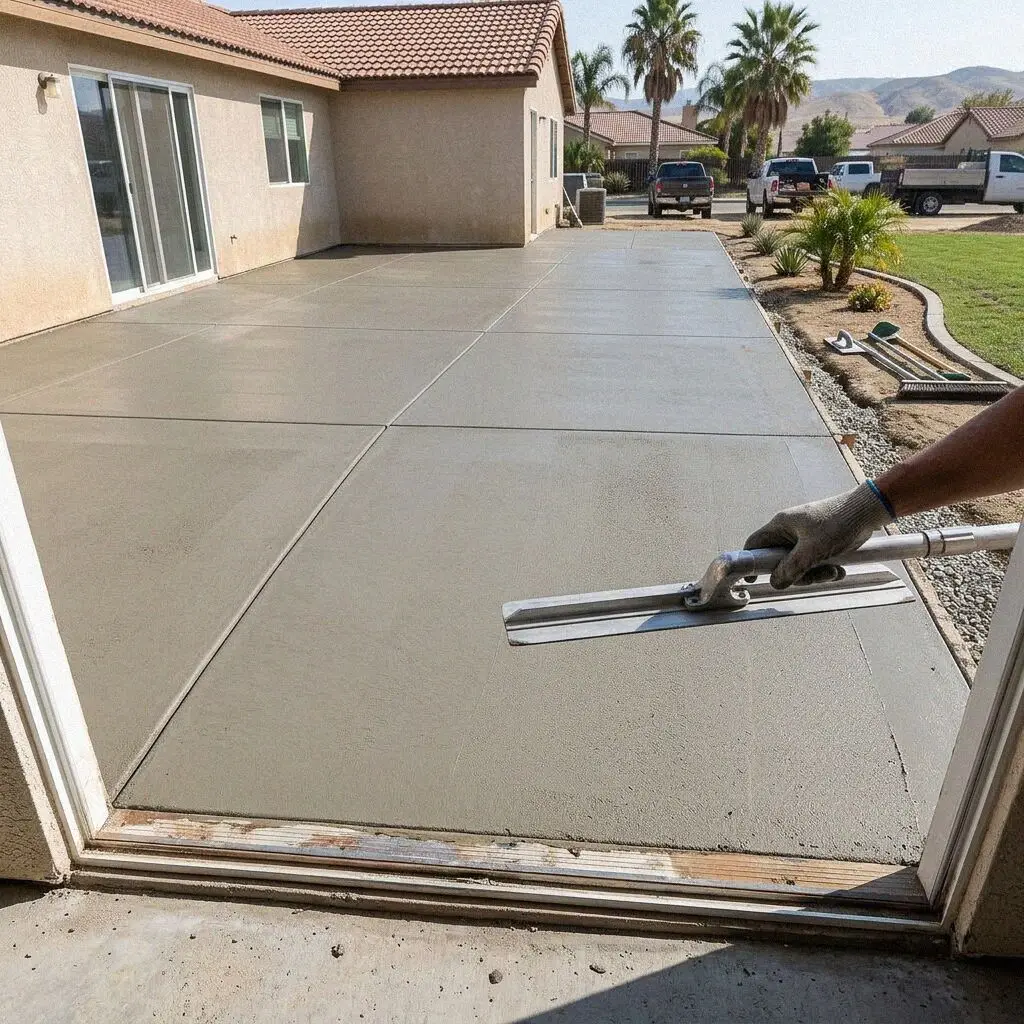
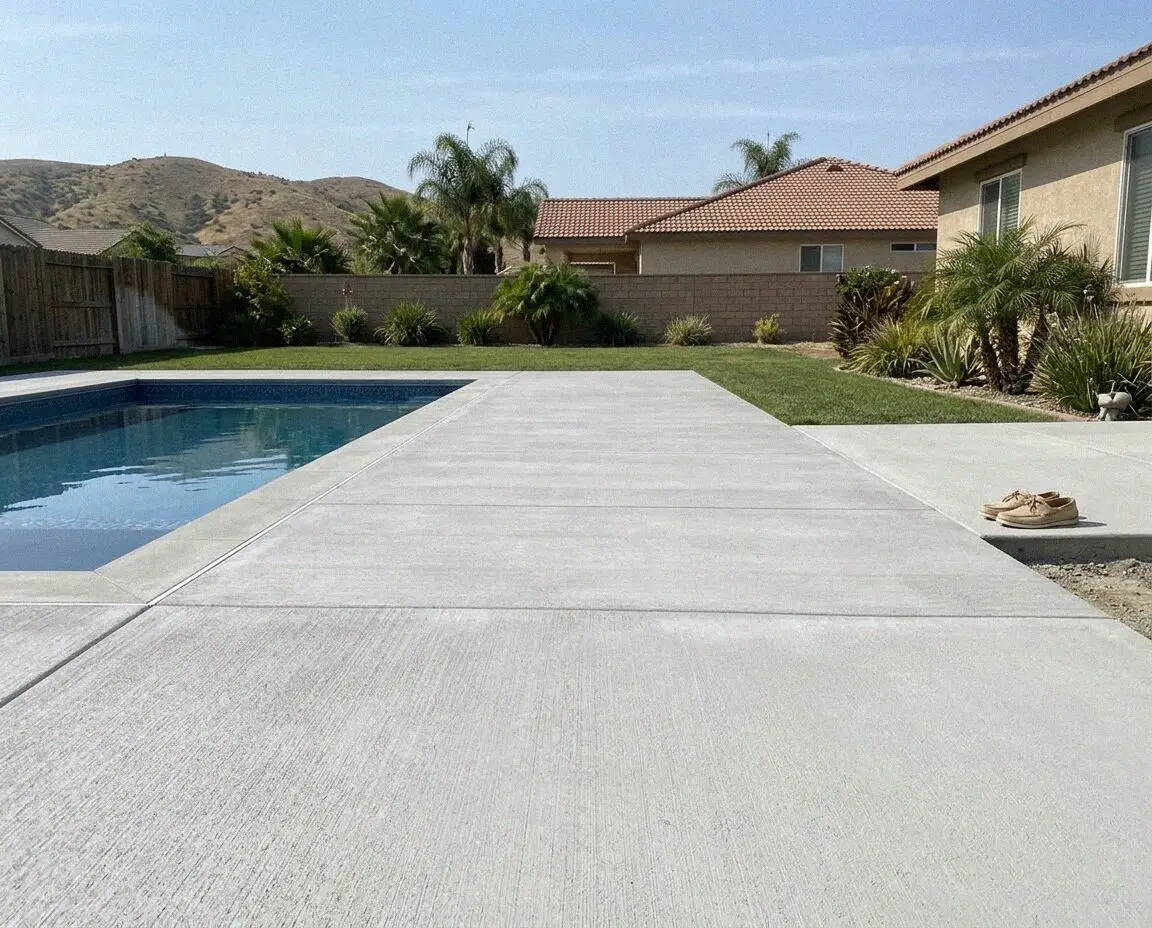
A finished broom-swept concrete patio at a Fontana tract home

Why Fontana gardens call us

How We Build a Patio in Fontana

A patio here fails from underneath. The ground north of the 210 is Lytle Creek wash, sand, gravel and rounded cobble that drains in an hour and settles at a different rate every few feet. A builder patio laid straight onto it holds for 15 to 20 years, then opens across the middle where one soft seam gave way under it.

Fontana Concrete Pro was founded in 2019 by Andre Whitfield, who spent 18 years on Inland Empire flatwork crews before it, and he sets the forms and the fall on every patio himself. Fontana is two eras of garden: the small Kaiser mill lots south of Valley Boulevard, deep at the back and reached down a side path, and the 1990s to 2010s tracts at Sierra Lakes, Coyote Canyon and Village of Heritage.

Patios are built under a CSLB C-8 concrete license with liability insurance on every job, to the California Residential Code. A slab inside your own lot line takes no permit in Fontana; a solid roof over it does, and we say which yours is at the visit. The work carries a written workmanship guarantee against defects in how it was built.

Warning signs

How do you tell a Fontana patio is past repair?

One crack straight across

A single crack running the width of the slab is a settlement break, not shrinkage. The ground under the middle dropped and the concrete spanned the gap until it could not. Patching the line hides it a season, then the two halves go on moving, because what moved is under the patio.

A corner that has dropped

One corner sitting lower than the rest is a void, and on the Lytle Creek fan a void is where cobble shifted and the fines washed down between it. Mudjacking lifts that corner back for a while, but the seam underneath is still soft, so the same corner is the one that drops again.

Water lying by the door

A patio should fall away from the house about a quarter inch per foot. When water sits against the threshold after a hose or a February storm, the slab has settled back toward the wall, and the water it holds goes under the stem wall rather than out to the garden where it belongs.

A surface flaking in the sun

Flakes lifting off in sheets the size of a hand are a finish that was closed too early, and a west-facing garden in Fontana finds it fast. The top skin sits on trapped bleed water, July afternoons in the mid-90s drive that off, and the layer above it comes away underfoot.

What's included

Every Concrete Patio in Fontana Includes

Standard on every patio we pour, at no extra line on the estimate. Each one answers something this ground or this sun does to a slab left sitting on native fan gravel.

Full slab removal

The old patio is broken out to soil and hauled the same day. Nothing new is poured over a cracked slab, because the line comes through.

The subgrade opened

The ground is dug and probed for soft seams before any base goes down, so a wash channel under your garden is found while it still costs nothing.

Cobble screened out

Rounded fan cobble will not lock up under a plate, so it comes out and graded base goes in, compacted in layers to 4 inches deep.

A 4-inch slab

Poured 4 inches thick in a 3,500 psi mix from a San Bernardino County plant, broom finished across the line you walk in from the house.

Joints on a grid

Control joints cut the day of the pour on a 10-foot grid, a quarter of the depth, so the shrinkage crack lands on a line somebody chose.

Fall from the house

The forms are set to a quarter inch per foot away from the wall, and the finished fall is checked with a level before the crew leaves.

Footings for a cover

If a pergola is going up now or later, the post footings are cast into the slab on the day, which is the only cheap time to put them there.

Cure and hand-over

Curing compound goes down the same afternoon, the garden is swept, and the written workmanship guarantee is handed over at the walk-through.

Your options

Fontana Patio Surfaces, Compared

Four finishes, judged first on how hot each gets, because a Fontana garden takes full sun from noon until the San Gabriels shade it. All four sit on the same screened and compacted base, and stamped work is measured on the same visit.

OptionHeat underfootLifespanUpkeepDays in the garden
Broom finishCoolest of the four, no sealer holding heat30 to 40 yearsReseal every 4 to 5 years1 day to pour, 7 before furniture
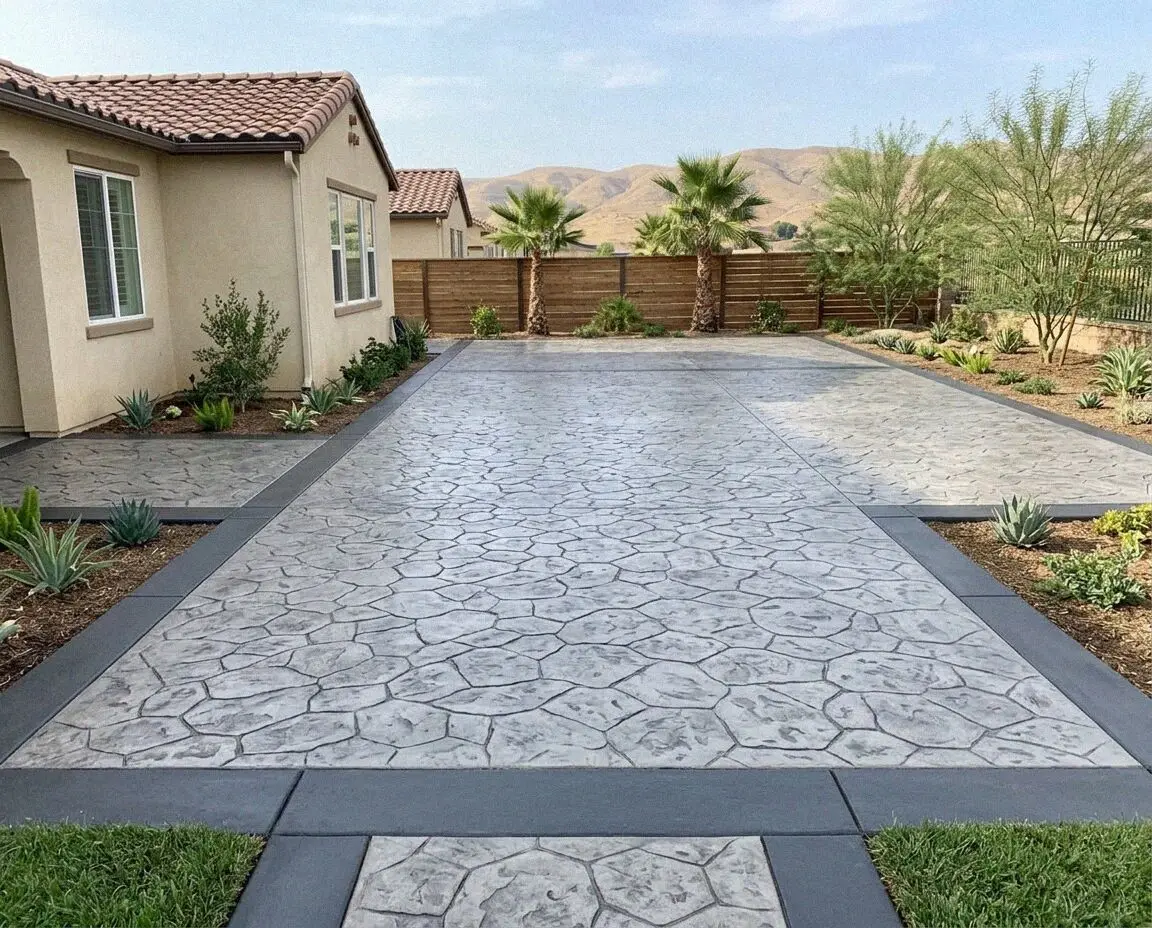
Stamped concreteWarmest barefoot, the sealer is why25 to 30 yearsReseal every 2 to 3 years2 to 3 days, 7 before furniture
Exposed aggregateCooler than stamped, and grippy when wet35 years or moreRinse each spring, reseal every 4 years2 days, 7 before furniture
Concrete paversSheds heat quickest once the sun is off30 to 50 yearsSweep sand into the joints once a year2 to 3 days, no cure to wait out

Broom finish is the coolest barefoot and the least to keep. Pavers cost the most to lay and can be lifted one at a time when the ground under them moves.

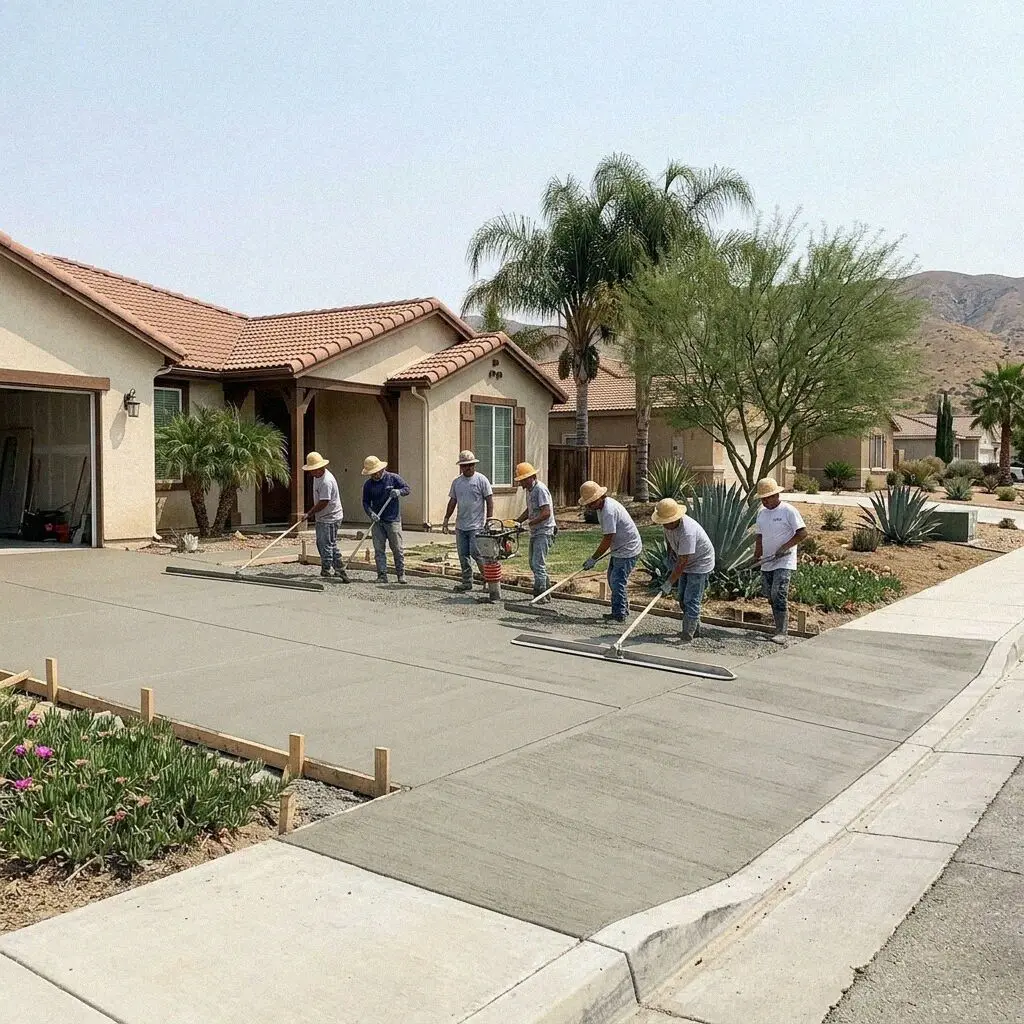
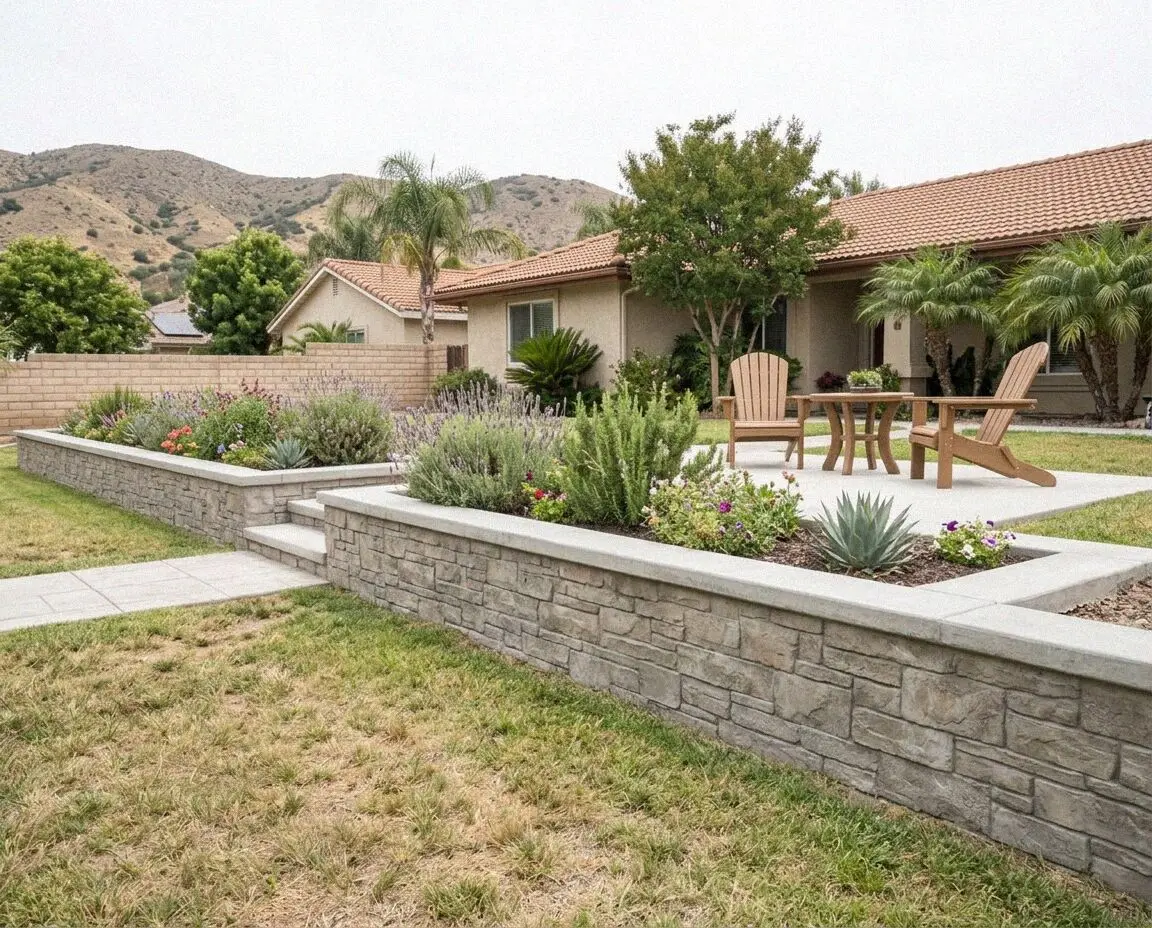
Concrete patio and pergola posts at a home in north Fontana

Local knowledge

What Makes a Fontana Patio Different

Two things decide a patio here, and neither is the concrete. Which way the garden faces sets how hot the surface gets, and what the mountains left under it sets how long it stays flat.

Fontana sits on the alluvial fan below Lytle Creek, so a back garden is sand, gravel and rounded cobble laid down by water. It drains fast, which is why nobody here has the heave the clay towns get, and it settles unevenly, which is why the tract patios north of the 210 are cracking at 15 to 20 years old. We dig it, screen the cobble out and compact graded base in layers, so the slab rests on something that stays put.

Heat is the other half. A west-facing garden takes the full afternoon through July and August, when the air is past 95 and the slab is hotter still, so most people here end up wanting a pergola over part of it. Post footings poured into the slab on the day cost a fraction of cutting holes in a finished patio two summers later, and they are the one thing worth deciding before the concrete arrives.


Our process

How a Fontana Patio Job Runs, Start to Finish

From the measurement to the day you put a table on it. One crew, one written figure, and the ground opened before anything is quoted rather than after the machine arrives.

1

The free on-site visit

Andre Whitfield measures the garden, notes which way it faces and digs into the subgrade to see what is under it. The estimate is written there.

2

Size, finish and any cover

You settle the shape, the finish and whether a pergola is going over it, since the footings have to be in the drawing before the forms go in.

3

Break-out and dig

Day one the old slab comes out and is hauled for crushing, the ground is opened, the cobble screened and graded base compacted in layers.

4

Forms, footings and pour

Forms set to a quarter inch of fall per foot, post footings dug and tied in, then the pour and the finish, started early on a hot week.

5

Joints, cure and walk-through

Joints cut the same day on a 10-foot grid, curing compound down and the garden swept. You walk it with the owner and take the guarantee.

What moves the estimate

What Decides a Fontana Patio Estimate?

Square footage moves the figure first, then what has to come out from under it. A typical rear patio here runs 300 to 400 square feet, and the ground below decides how much of the day goes on digging. Every estimate is measured and written on site.

The size and the shape

A square 300 square feet pours faster than the same area in an L around a corner, because forms, joints and edges all follow the outline.

What is already there

Bare ground is a clear start. A cracked builder slab is a morning of breaking out and hauling before a shovel touches the subgrade under it.

Footings for a shade cover

A pergola or a solid roof needs footings dug below the slab and tied to it, and a solid cover also takes a City of Fontana building permit.

The finish you choose

A broom finish is one pass. Stamping, an integral color or exposed aggregate each need more hands on the slab in the window before it sets.

The number comes from the visit, free and in writing, and we ring you back within 1 business day to book a date for it. (909) 555-0168 or send us a message.

Ready to sort your Fontana patio?

Send the form or call, and someone rings you back within 1 business day to fix a time. Andre Whitfield measures the garden and opens the ground before anything is written down, and the figure you get costs nothing and commits you to nothing.

Request a Free Estimate

Written on site · No obligation

By submitting, you agree to our disclosure and consent terms, including being contacted by Fontana Concrete Pro.

Reviews

What Fontana Homeowners Say About Their Patios

Reviews left on Google and Facebook by homeowners whose back gardens we poured. All three are patio jobs rather than drives or garage floors.

Google review

“The builder patio behind our Sierra Lakes house had a crack right across it at seventeen years old. They dug the whole thing out, screened a load of round rock off the base and poured 340 square feet. Andre cut the joints himself that afternoon. Two summers and it is flat.”

K. Mbeki, Sierra LakesConcrete Patio Construction · Google · 2026
Google review

“Our garden faces west and you could not stand on the old patio after two. We had them pour it with the pergola posts set in the slab, so the cover went up a month later with nothing drilled. He talked us out of the stamped finish because of the heat, which cost him money.”

R. Alcaraz, FontanaConcrete Patio Construction · Google · 2026
Facebook review

“Small lot off Randall, everything down a three-foot side path by barrow, and they still had 260 square feet poured in a day. Water used to sit at the back door every winter and now it runs off to the lawn. One edge chipped and they came back and made it good.”

J. Fuentes, FontanaConcrete Patio Construction · Facebook · 2026

FAQ

Questions About Concrete Patios in Fontana

What people here ask before booking a patio, answered with the figures we actually build to rather than a range that fits any town.

(909) 555-0168
  • How much does a concrete patio cost in Fontana?

    Square footage first, then what comes out from under it. A 300 to 400 square foot rear patio is the common size here, an existing cracked slab adds a morning of break-out and haulage, and screening fan cobble out of the base adds machine time. Footings for a cover and a stamped finish are the other two lines. Every estimate is measured and written on site.

  • How long does a concrete patio take to build?

    Two to three days on site for most gardens. Break-out and the dig take the first day, base and compaction the second, and the pour and finish a single morning. Joints are cut that same day. Keep off it for 24 hours, give it 7 days before furniture, and 28 before you seal it.

  • What is included in a Fontana patio pour?

    Removal of the old slab, the subgrade opened and probed, fan cobble screened out and 4 inches of graded base compacted in layers, a 4-inch slab in a 3,500 psi mix, joints on a 10-foot grid and a quarter inch per foot of fall away from the house. The post footings for a pergola are the part people expect to be extra, and they are not.

  • Do I need a permit for a patio in Fontana?

    Not for the slab. A patio inside your own lot line is exempt, so nothing is filed for the concrete itself. A solid roof over it is a structure and does take a permit from the Building & Safety Division at the City of Fontana, through the Build Fontana portal. We file it and meet the inspector.

  • When is the best time of year to pour a patio here?

    October through May is easiest. Fontana runs in the mid-90s through July and August, and a hot slab loses its surface water before it has set, which is what leaves a finish that flakes later. Summer pours start at 6 in the morning and are floated by 10, with the slab kept wet for the 7 days the Portland Cement Association sets out.

  • What guarantee comes with a new concrete patio?

    You get a written workmanship guarantee against defects in how it was built, handed over at the walk-through. It covers the compaction under the slab, the joint spacing, the fall away from the house and the finish. It does not cover hairline shrinkage marks along a cut joint, which is where they are meant to land, or a slab a vehicle has been parked on.

  • Can a pergola go on the patio afterward?

    Yes, but it costs more later. Posts want their own footings under the slab, so after the pour that means core drilling through 4 inches of concrete and digging blind beside a finished surface. Cast on the day, the same footings are two hours with a shovel. Tell us at the visit even if the cover is three years away.

  • Do I need to be home while the patio is poured?

    No. Be there for the measurement at the start and the walk-through at the end. Before the crew arrives, unlock the side gate, clear the furniture and pots, and turn the sprinklers off that side of the garden. Afterward keep feet and pets off it for 24 hours and furniture off for 7 days.

Service area

Patios Across Fontana and the Towns Around It

The towns this crew pours patios in, nearest first, across 4 counties from San Bernardino out to Orange. Each name below opens that town's own page.

Show All Areas We Serve

Start Your Fontana Patio

A free estimate, measured in the garden and written before we leave, with a call back within 1 business day. Nothing is owed afterward, and the figure is yours to compare.