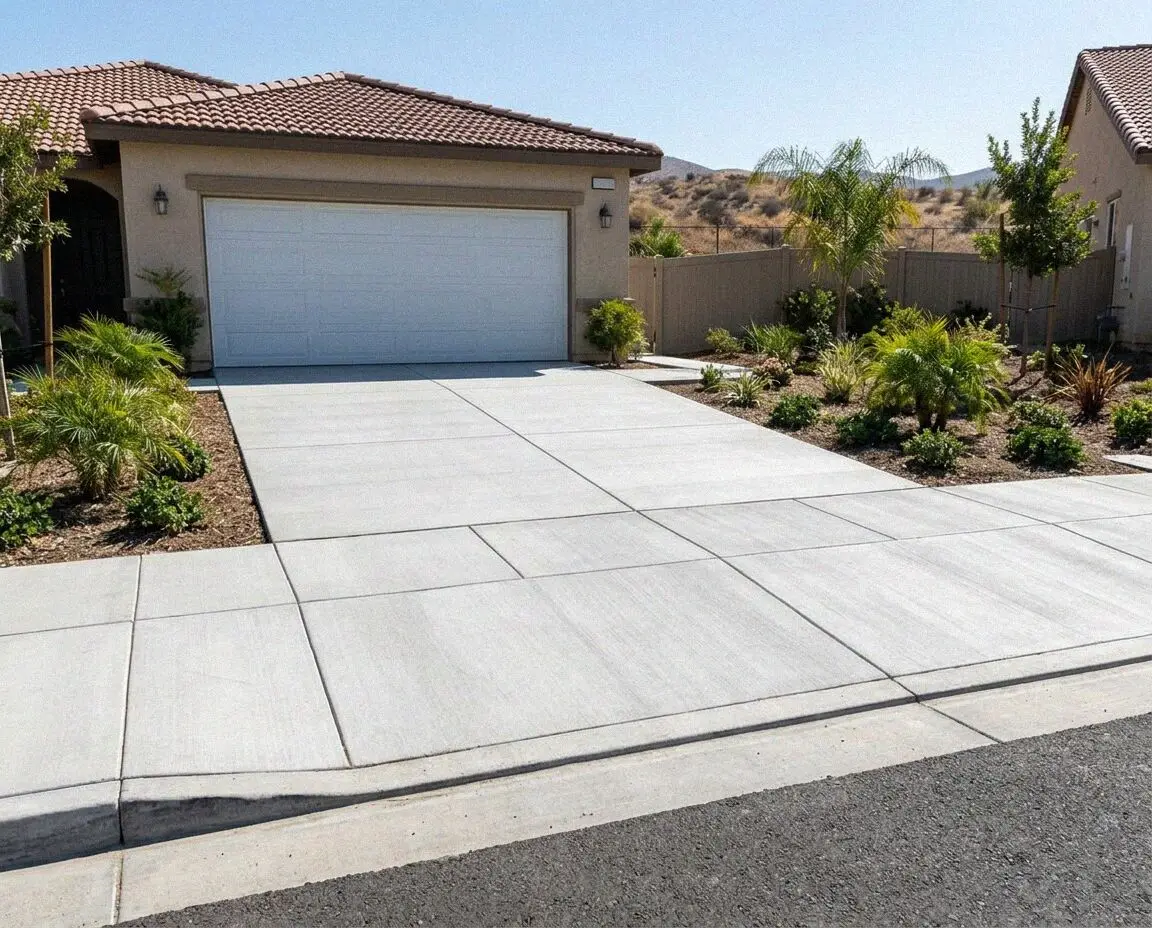
Two things set a walk here apart. The concrete in front of your house belongs to the city, and the ground beneath it was dropped by a creek rather than settled into clay.
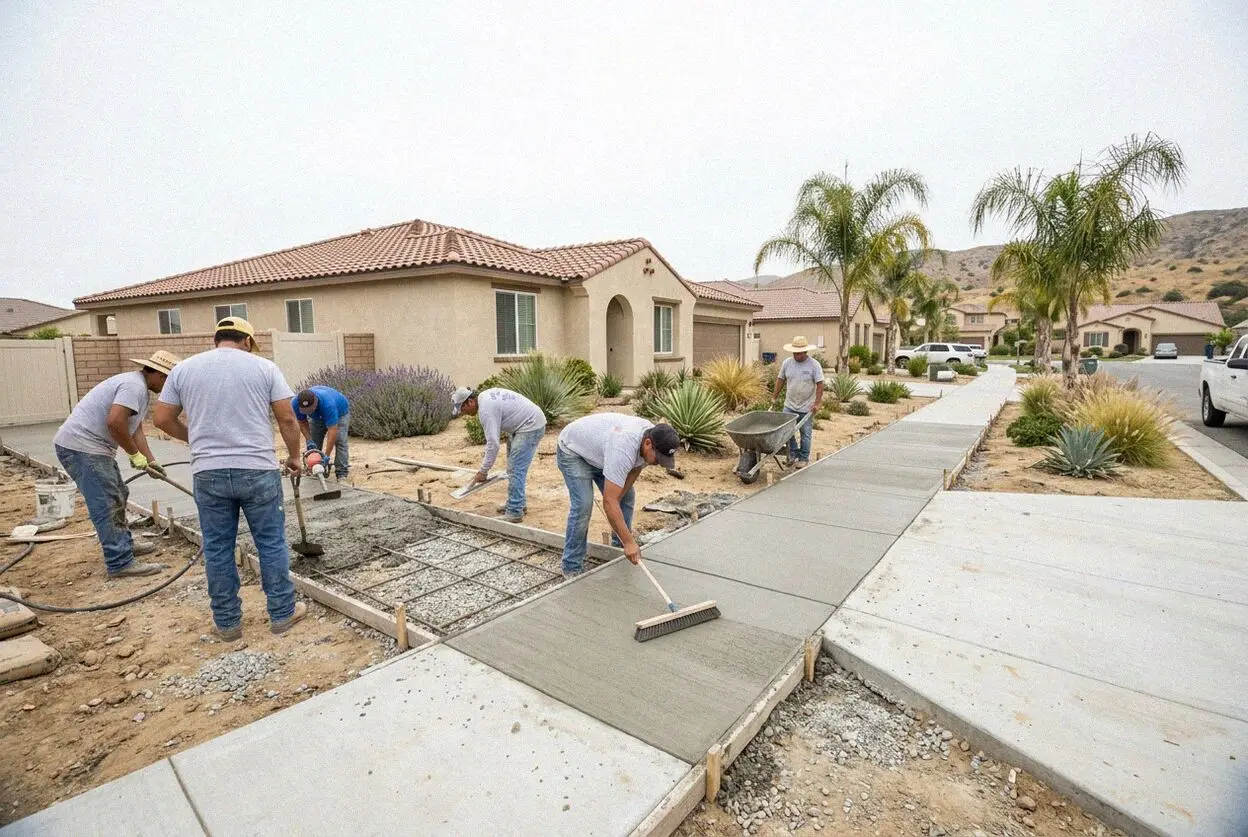
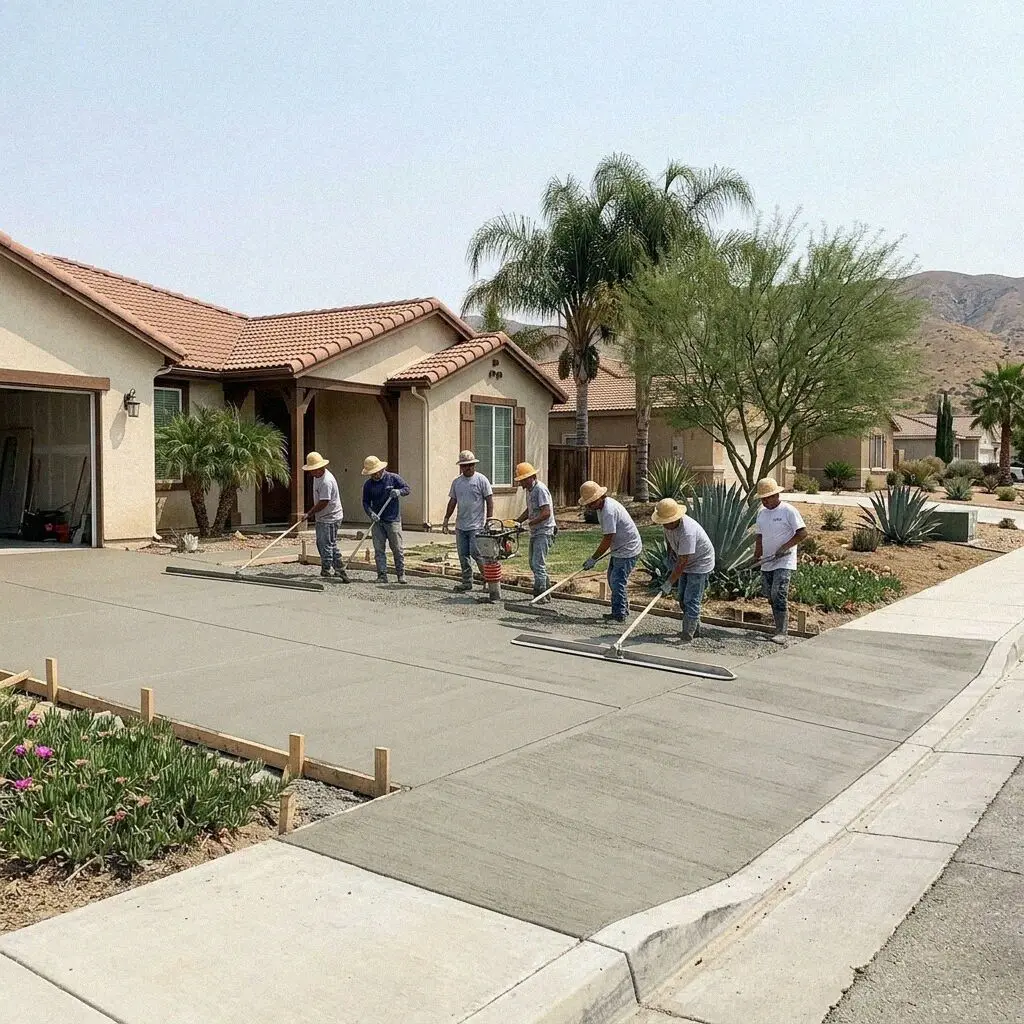
Lytle Creek built this ground out of sand, gravel and rounded stone, and it laid it in channels, so what sits eighteen inches down changes across the width of a single lot. A slab with a car on it spreads that load about; four inches of walk cannot, so each panel is more or less its own footing and the one over a soft channel drops. That is why the trench is opened along the whole run and base compacted under all of it, rather than only under the piece that failed.
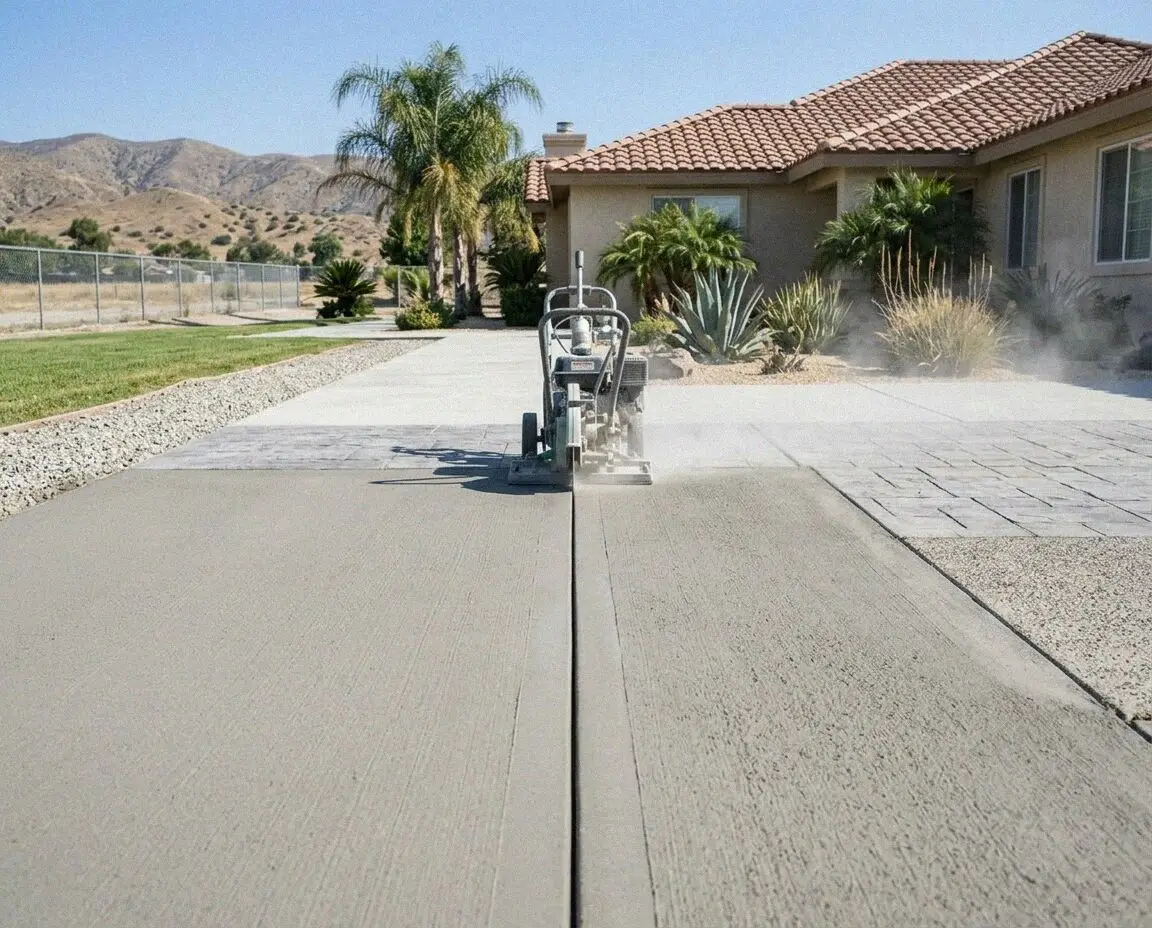
Age decides which of the two Fontanas we are standing in. On the mill blocks the walks are original, the whole frontage is the same age and it fails in runs, so replacing one slab there simply moves the step twelve feet along. In the northern tracts the concrete is sound and one tree has lifted one panel, which is a saw, a barrier and a morning. Which of the two you have is settled at the visit, because it sets the count of panels, and the count carries the figure.