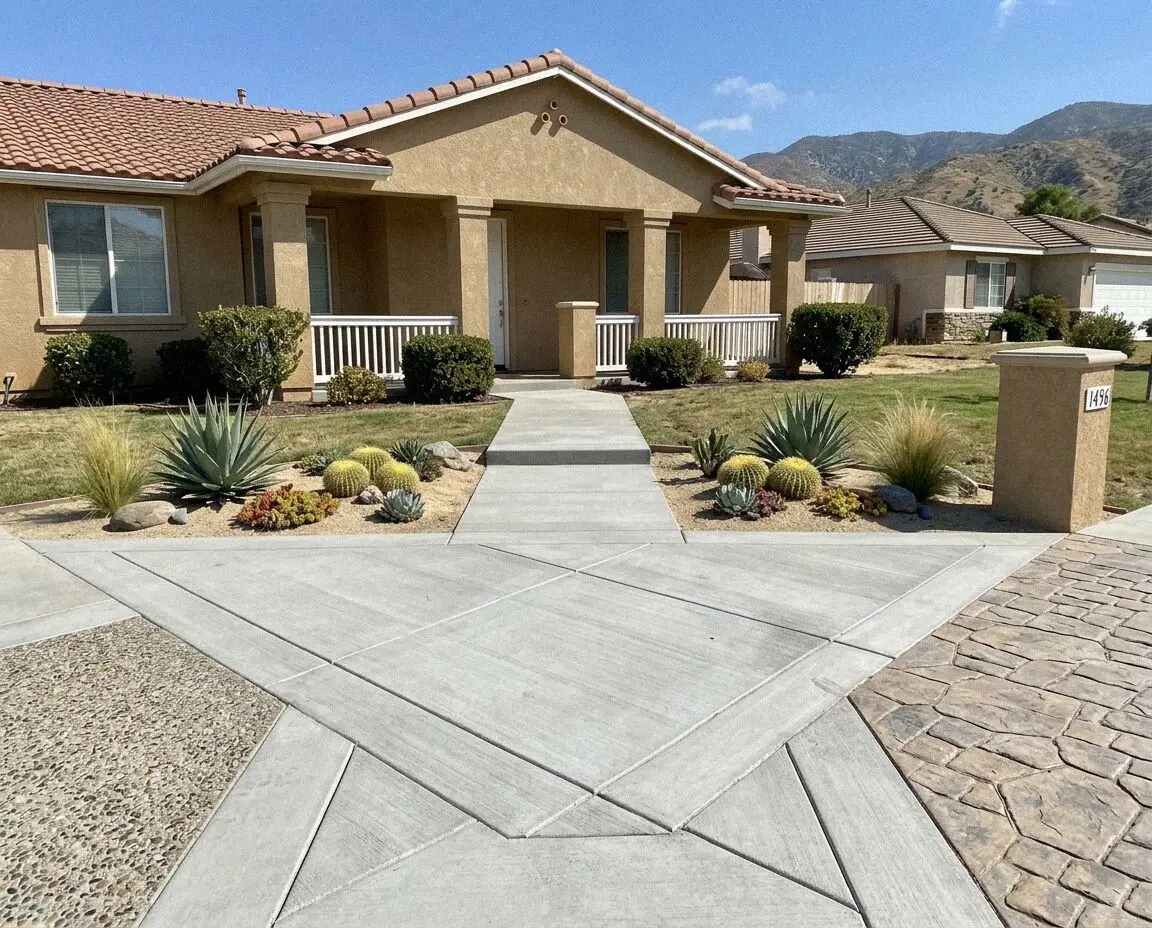
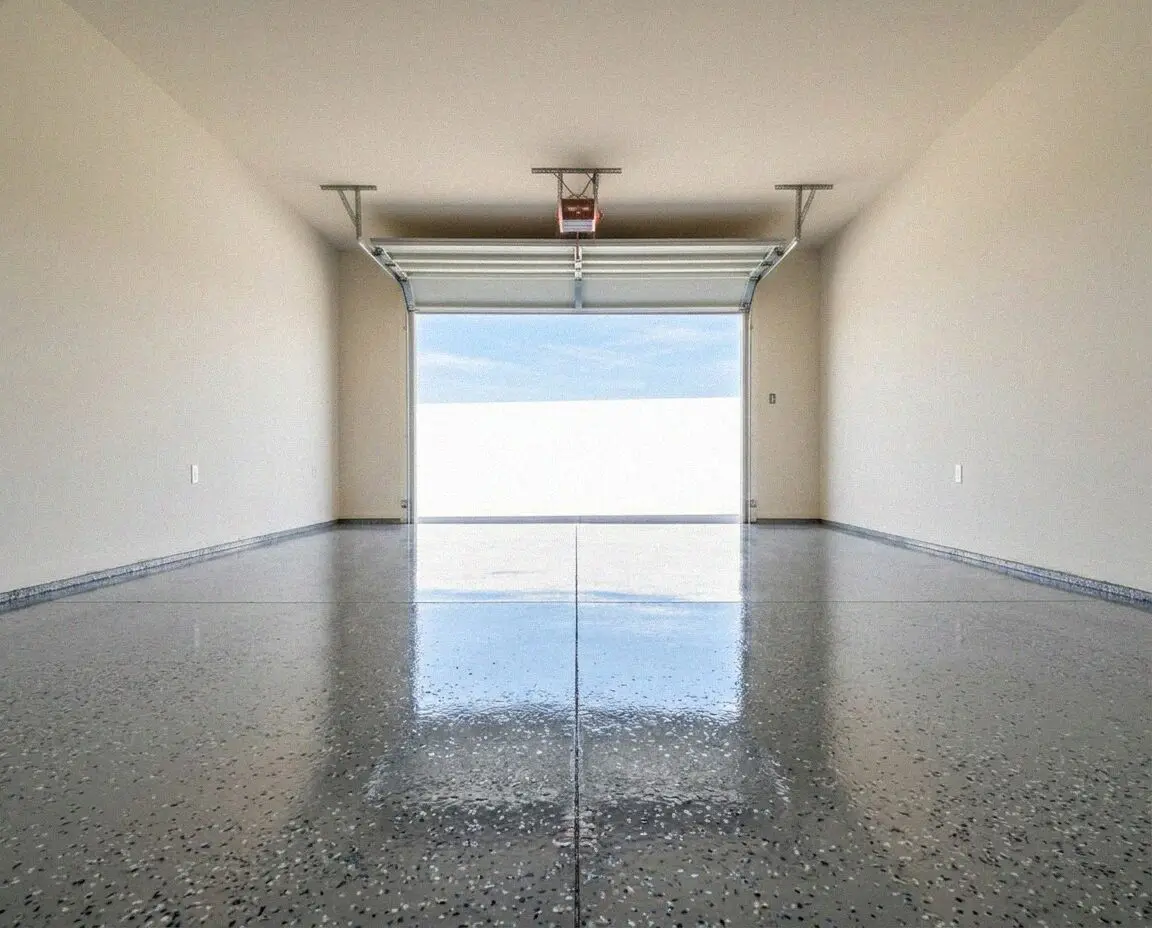
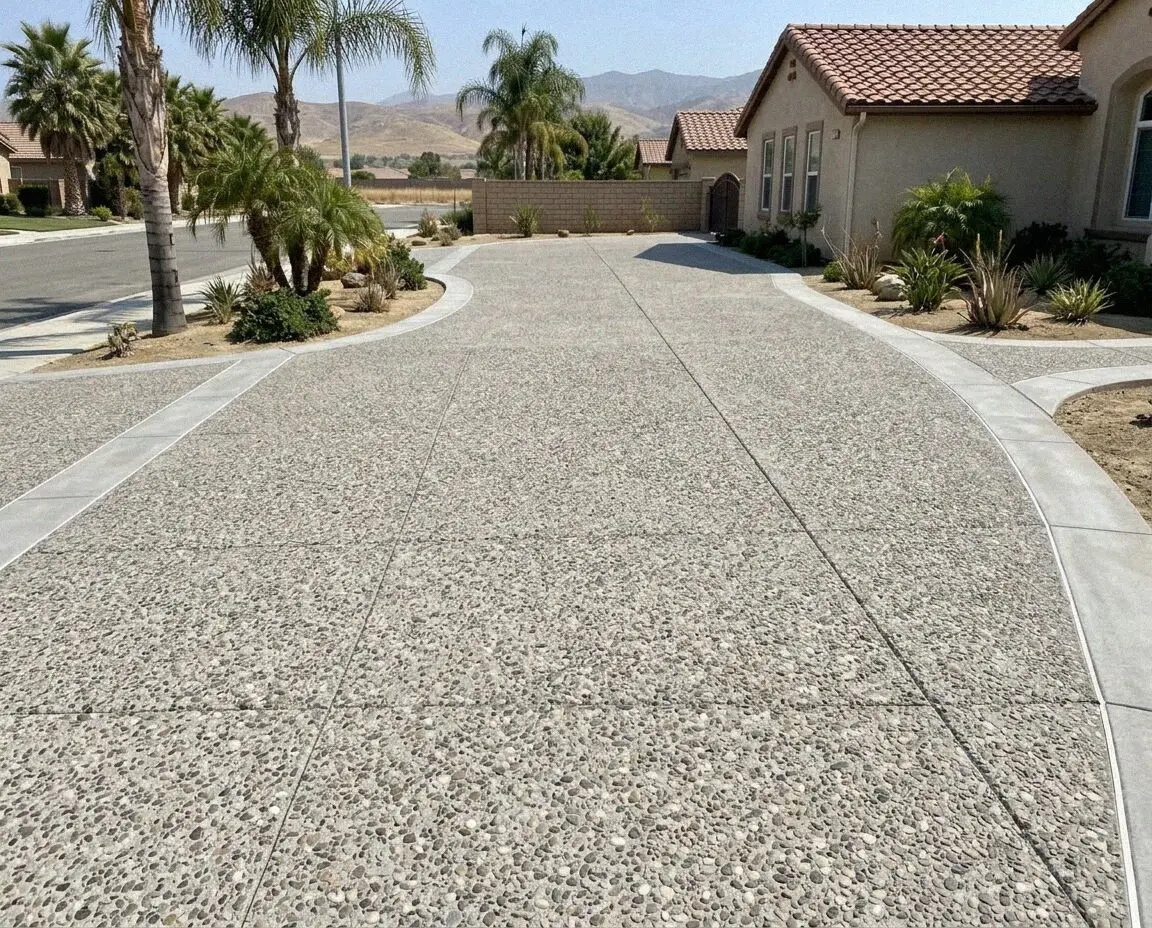
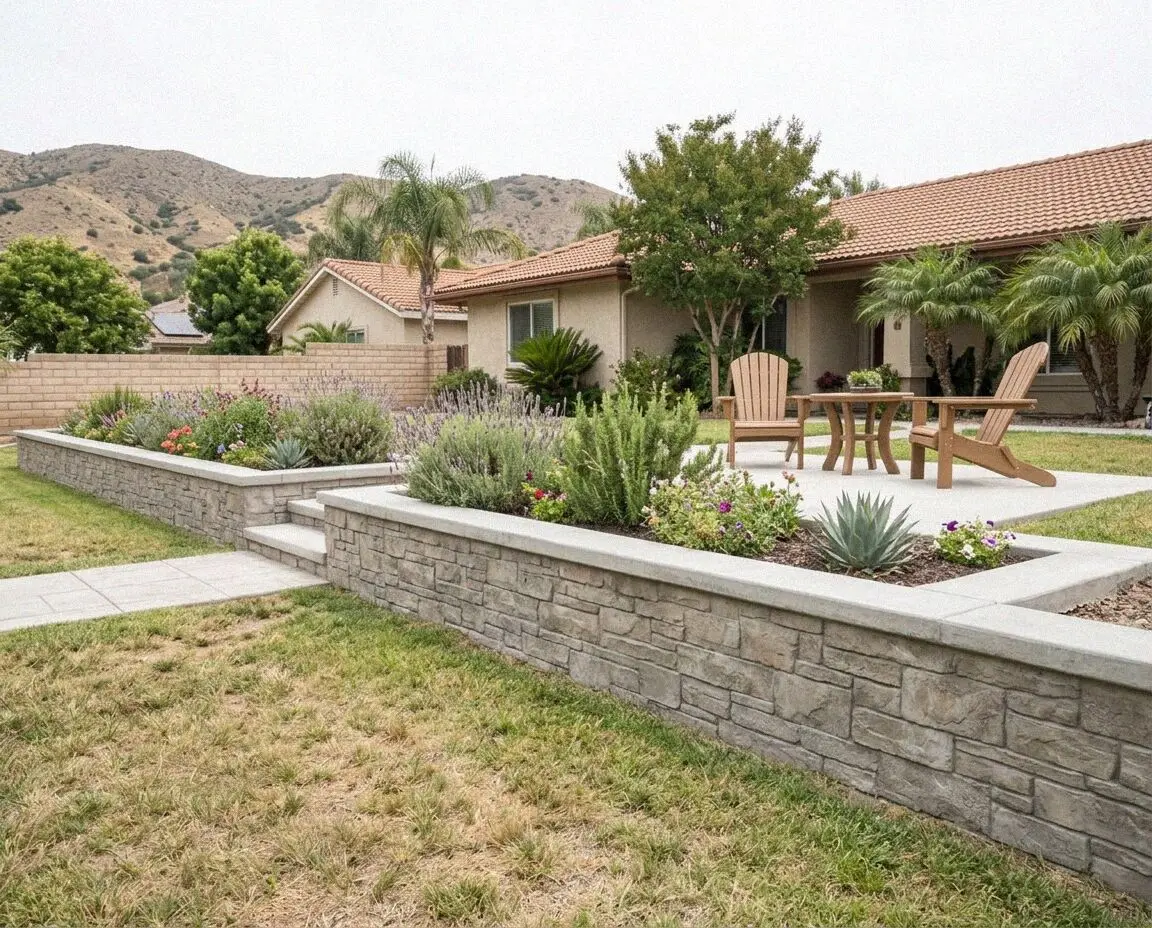
Most of Yorba Linda is built on the Chino Hills, and the hills are clay. They swell with the winter rain and shrink through the dry summer, and a slab poured onto them moves with the ground each year.
The graded tracts of the 1980s and after, East Lake Village, Bryant Ranch and the streets around Black Gold, sit on pads cut from that clay and filled with it, so the swell happens under the whole yard rather than at one edge. A patio poured on it heaves at a corner in its first wet winter, and a wall holding a cut lot leans once the clay behind it is wet and unrelieved. The older flats along Yorba Linda Boulevard toward Placentia are river sand and behave better.
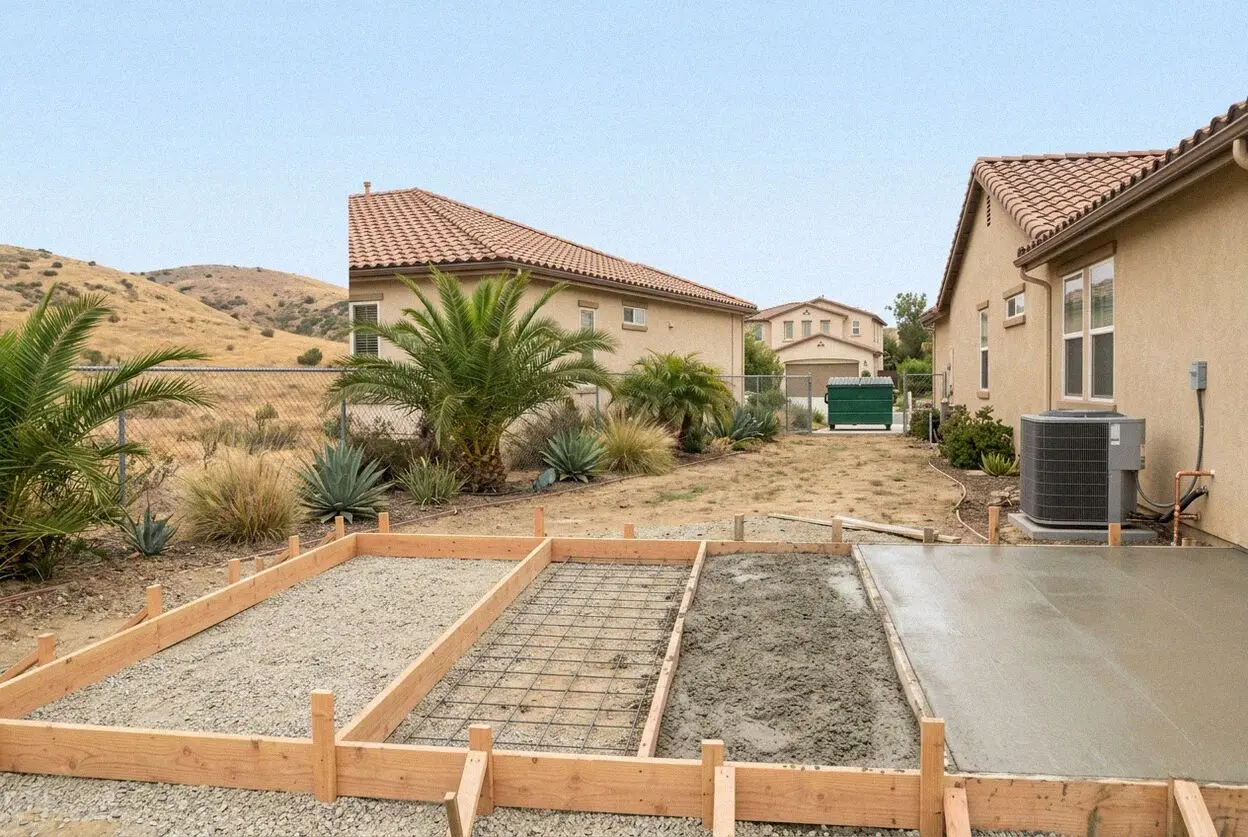
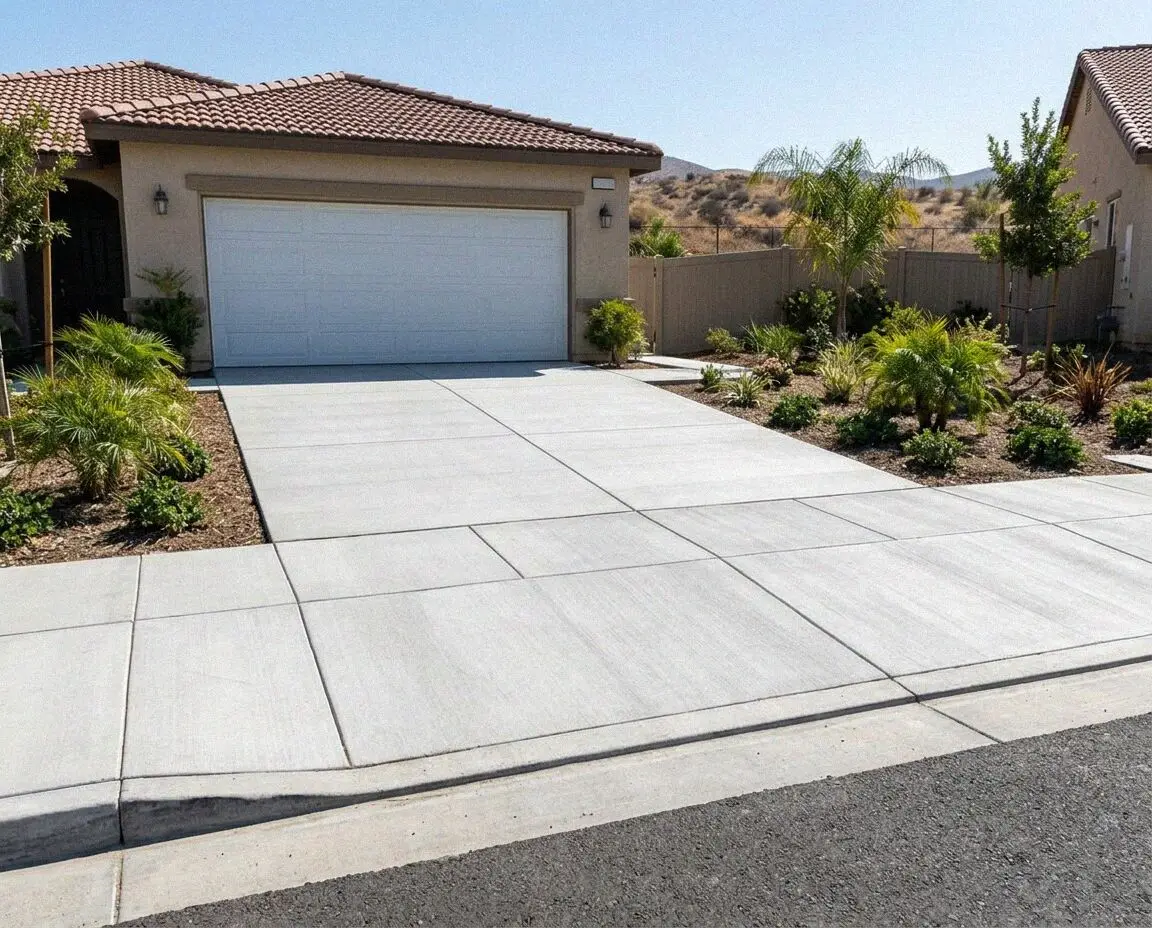
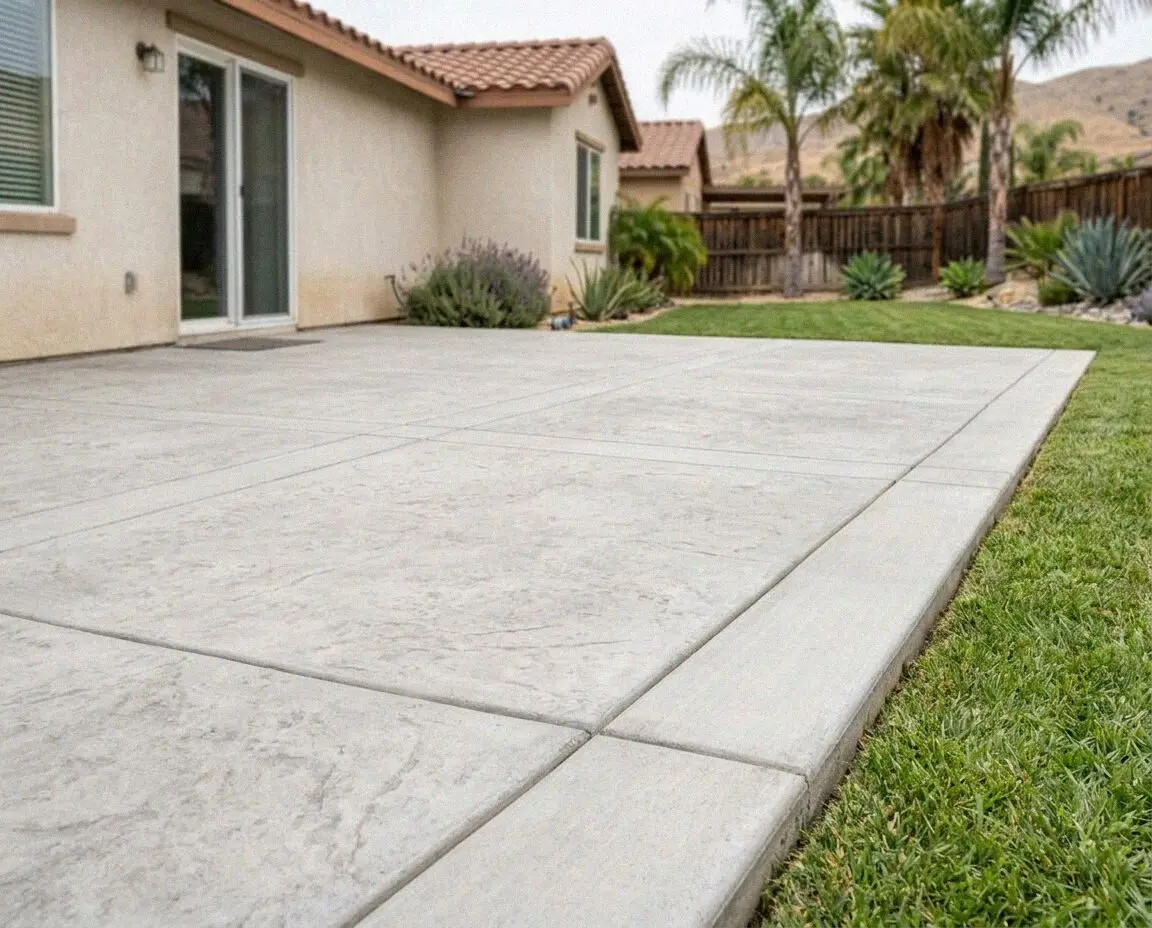
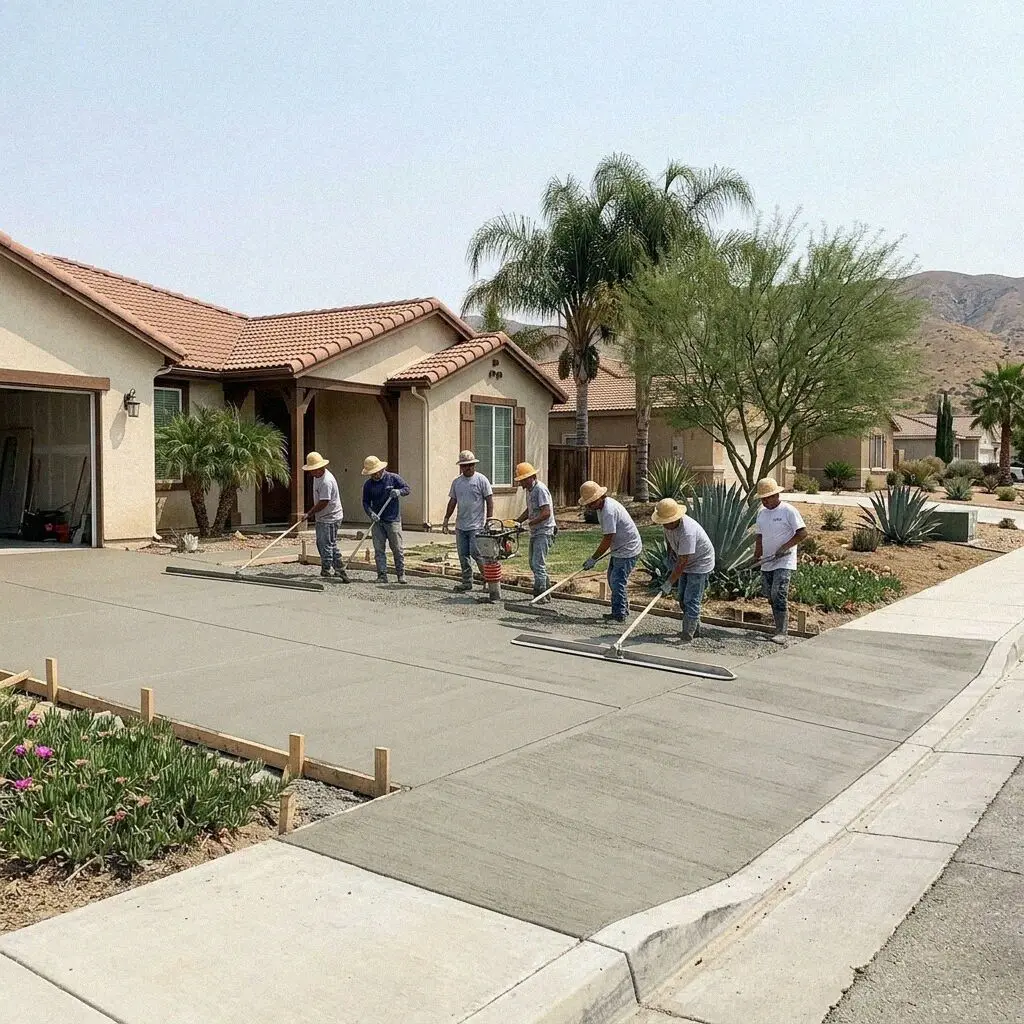
So every slab here is built to move as a whole or not at all. The clay is cut out to a firm depth and replaced with 6 inches of compacted Class 2 base rather than 4, the slab is poured at 4 inches with number 3 steel on an 18-inch grid, and where it meets the house it is doweled. A wall is footed below the swelling zone, drained behind the stem to a pipe at its toe, and backfilled with gravel rather than the clay that came out, because a wall fails from the water it holds, not the soil.