Serving Fontana, CA and surrounding areas.(909) 555-0168
Fontana Concrete Pro

Concrete Retaining Walls in Fontana, CA, Drained and Engineered

Fontana Concrete Pro founds walls to 24 inches, drains the back with rock and weep holes, and pulls the Fontana permit on anything over 4 feet. Every estimate is measured and written on site.

Google reviewsFacebook reviewsBetter Business Bureau reviews5.0 Stars Rated by our customers · Google, Facebook and the BBB
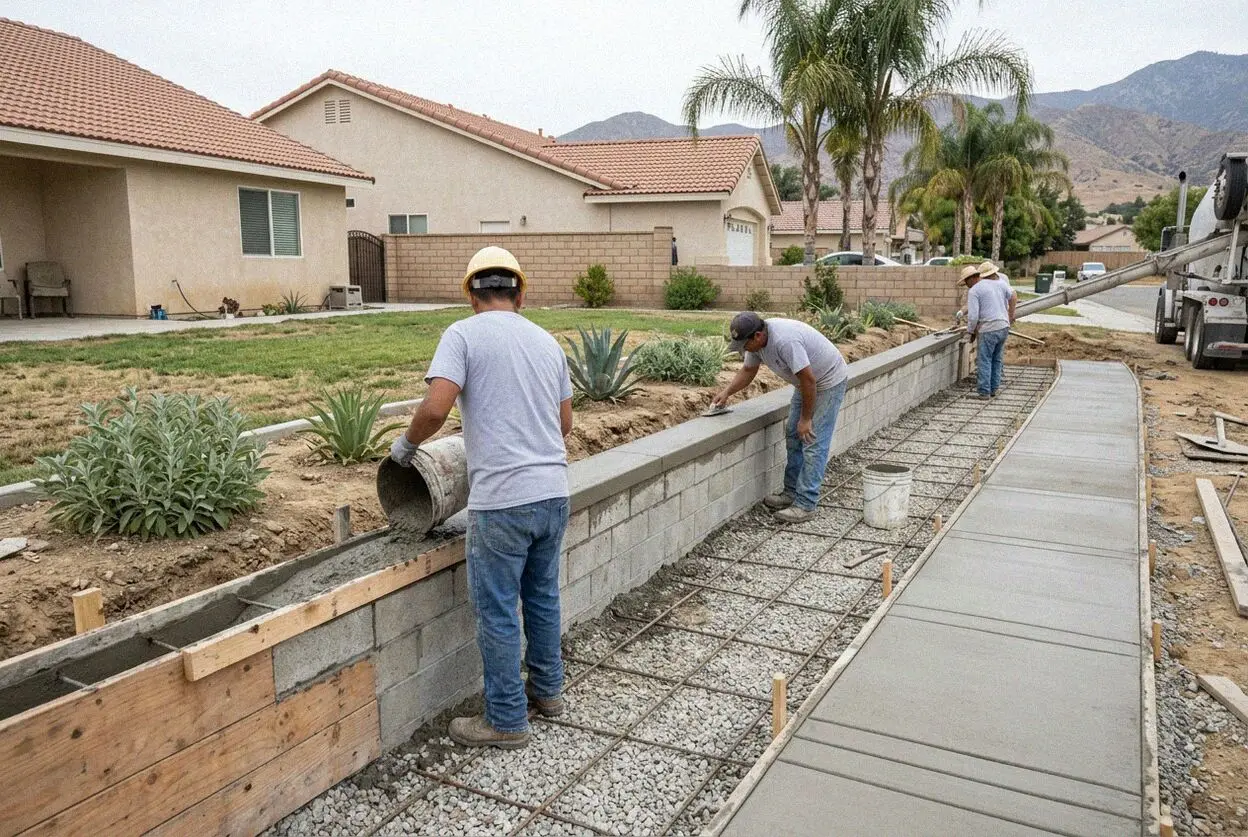
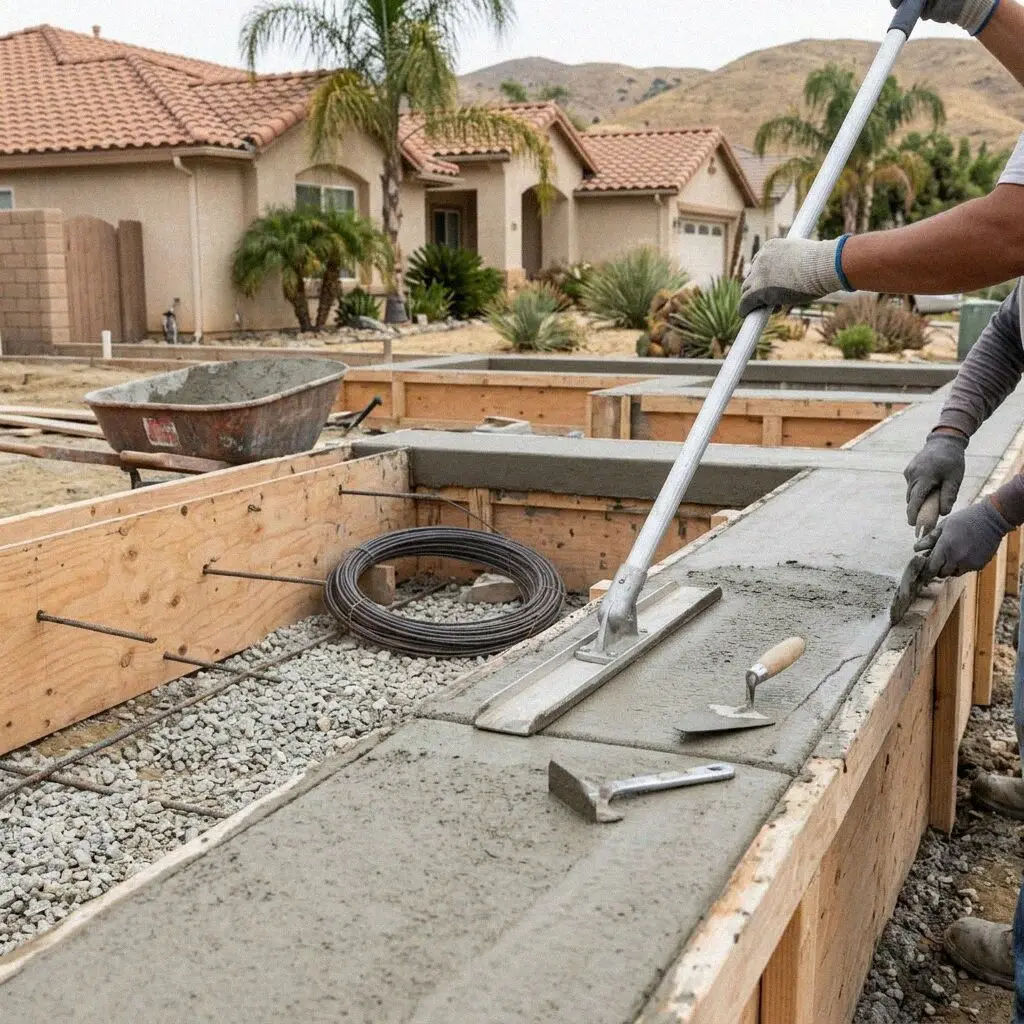
A poured concrete retaining wall on a graded hillside lot in Fontana
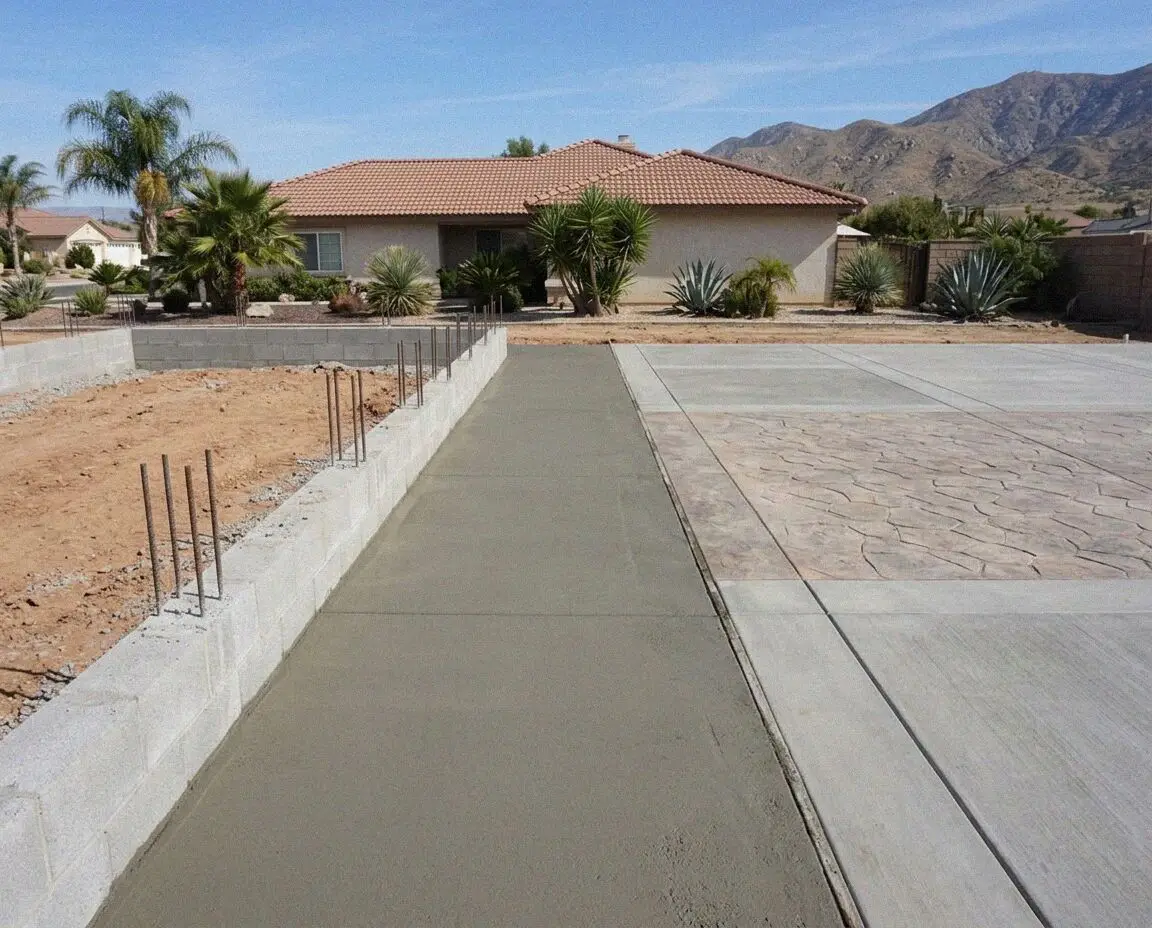
A finished retaining wall holding a cut slope behind a Fontana home

Walls on the Lytle Creek fan

How We Build a Retaining Wall in Fontana

A retaining wall here is beaten by water, not by weight. Fontana sits on the alluvial fan carried down from Lytle Creek and the San Gabriels, so the ground is sand, gravel and rounded cobble that drains fast in a storm and then slumps once it is saturated. A wall built tight to that soil with nowhere for the water to leave gets pushed, and the toe finds little to press back against.

Fontana Concrete Pro was founded in 2019 by Andre Whitfield, who spent 18 years on hillside crews before that, and he sets the footing line himself on every wall. Fontana rises north toward the San Gabriels and south-west into the Jurupa Hills, so the walls we build are mostly holding a cut or a fill on a graded lot in Southridge, Hunters Ridge, Sierra Lakes or the Village of Heritage.

Every wall is built under a CSLB C-8 concrete license with liability insurance on every job, to the California Building Code, and anything over 4 feet measured with its footing goes through the Building & Safety Division before a trench is dug. Rounded cobble gives poor passive resistance, so the footing is sized on the soil we find rather than on a standard detail. The work carries a written workmanship guarantee against defects in how it was built.


Warning signs

How do you know a Fontana retaining wall is failing?

A top edge leaning out

Hold a level against the face and read the gap at the top. A wall that leans downhill is rotating on its footing, because saturated fan sand is pressing on the stem and the cobble under the toe is giving way rather than holding. Leaning does not stop; it accelerates each wet winter.

Weep holes that stay dry

Weep holes that run nothing in February are blocked, not unnecessary. Fine sand off the fan migrates into the gravel behind an unfiltered wall and seals the drainage path, so water that used to leave now stands against the stem. Pressure builds behind a wall that looks sound.

Ground dropping behind

A trench or a dish opening along the back of the wall means the fill behind it is still moving. On a tract lot cut and filled in the 1990s, that soil was placed to a compaction spec, and ground going down now says water is running through it and carrying the fines away.

Cracks stepping through

A crack that climbs the wall in steps is the footing moving, and one that runs straight up the stem is the wall bending. Either way the steel is absent or too light for the height being held. Patching the face hides the line for a season and changes nothing about the cause.

What's included

Every Fontana Retaining Wall Includes

These are standard on every wall we build, with no add-ons. Each one answers the same thing: getting water out from behind the stem before it can push, and founding the footing deep enough to hold in loose fan gravel.

A footing to 24 inches

The trench goes to 24 inches or to firm bearing below that, so the toe sits under the loose surface gravel and not in it.

Steel through the stem

Vertical bar tied into the footing at the spacing the height needs, plus a horizontal mat, so the stem carries the load instead of hinging.

A gravel drainage chimney

A 12-inch column of clean rock stands the full height behind the wall, so water reaching it drops to the pipe instead of loading the back face.

Filter fabric on the rock

Fabric wraps the gravel and the pipe, which is what stops fine fan sand migrating in and sealing the drain within a few seasons.

A perforated drain line

A 4-inch perforated pipe runs the base of the chimney on a fall and daylights at the low end, so the water has somewhere to go on the wettest day.

Weep holes at 4 feet

Weeps every 4 feet through the stem, each one backed by gravel, so a blocked line still shows itself at the face rather than hiding.

Permit and inspection

Where the wall passes 4 feet with its footing we file through Build Fontana and meet the inspector at the trench and at the steel.

Backfill and the guarantee

Backfill placed in lifts and compacted behind the drainage, the site swept, and the written workmanship guarantee handed over at the walk-through.

Your options

Fontana Retaining Wall Options, Compared

Four ways to hold a slope on a Fontana lot, judged on the height each suits, what it is good for, what it asks of you afterward and how long the crew is on site. All four get the same drainage behind them.

OptionHeight it suitsBest forUpkeepTime on site
Poured concrete wallUp to 10 feet, engineered above thatCut slopes tight to a house or a property lineClear the weeps each autumn5 to 8 days, then 7 to cure
CMU block on footingUp to 8 feet with a designed footingLong garden runs and side-yard cutsReseal the cap every 5 years6 to 9 days, grout cured in 7
Segmental blockUp to 4 feet without engineeringPlanters and low tract-slope terracesReset a shifted block, weed the joints2 to 4 days, no curing
Tiered wallsTwo or three lifts of 3 to 4 feetLong graded back slopes with room to benchKeep the benches planted and draining6 to 10 days across the tiers

Poured concrete holds the most height in the least thickness; segmental block is quickest to build and easiest to take apart. Your slope settles which one fits.

A tiered block retaining wall stepping down a cut slope in Fontana

Local knowledge

What Makes a Fontana Retaining Wall Different

Two things decide a wall in Fontana: ground laid down by Lytle Creek that drains fast and holds poorly, and hillsides that were cut and filled to build the tracts.

The fan under this city is sand, gravel and rounded cobble rather than the swelling clay found further south, so nothing here presses on a wall as it wets and dries. What it does instead is lose strength when it is saturated and give a footing very little to push against sideways. That is why the answer is drainage and bearing depth rather than a thicker face, and why the Web Soil Survey sheet for a lot is worth reading before a trench line is set.

The second thing is the grading. Tracts built across these slopes through the 1990s and 2000s were cut on the uphill side and filled on the downhill one, so a wall often stands on engineered fill of a known depth and a soils report for the tract already exists. We ask for it, because it tells us which side of the pad is fill and how deep the footing has to go to reach ground that was not placed by a scraper.

Our process

How a Fontana Retaining Wall Job Runs, Start to Finish

A wall runs from the measurement to the day the backfill goes in. One crew, one written figure, and any permit filed by us through Build Fontana before the excavator arrives.

1

Free on-site measurement

Andre Whitfield shoots the grade, measures the run and the retained height, and digs a hand hole to see what the footing will sit in.

2

Height, drawing and a date

You choose the wall type and cap. Anything over 4 feet with its footing gets a drawing and, where there is a surcharge above, an engineer's stamp.

3

Permit through Build Fontana

We file the plan with the Building & Safety Division and book the trench and steel inspections, so no counter visit is yours to make.

4

Trench, steel and the pour

The footing is dug to 24 inches or to bearing, steel tied and inspected, then the footing and the stem poured and left to cure 7 days.

5

Drainage, backfill, walk-through

Pipe, gravel and fabric go in behind, fill is placed in lifts and compacted, then you walk the wall and take the written guarantee.

What moves the estimate

What Decides a Fontana Retaining Wall Estimate?

Retained height moves the estimate more than length does, because height decides the footing, the steel and whether the wall needs a stamped drawing at all. What stands above the wall is the next thing we look at. Every estimate is measured and written on site.

Retained height

Under 4 feet with its footing needs no permit here. Past that the footing widens, the steel steps up and a drawing goes to the city.

What sits above it

A driveway, a pool or a second wall above the crest is a surcharge, and a wall carrying one is designed for that load rather than for soil alone.

Access to the slope

A back slope reached only through a side gate is dug and poured by pump and barrow, which adds days a front-yard wall on the street does not.

Length and the tiers

Length adds footing, drain line and backfill at a steady rate. Splitting a tall run into two benched tiers changes the price of both.

The figure comes from the visit, free and in writing, and we call back within 1 business day to book the work in. (909) 555-0168 or send us a message.

Ready to hold that Fontana slope?

Send the form or call and someone rings you back within 1 business day to set a time for the visit. The measurement and the written figure cost nothing, and nothing is owed if you go no further with it.

Request a Free Estimate

Written on site · No obligation

By submitting, you agree to our disclosure and consent terms, including being contacted by Fontana Concrete Pro.

Reviews

What Fontana Homeowners Say About Their Walls

Reviews left on Google and Facebook by homeowners whose slopes we walled. All three are retaining wall jobs rather than flatwork.

Google review

“The old block wall at the back of our pad had leaned about 3 inches and the ground behind it had dropped. They dug to firm bearing, poured a new footing and ran gravel and a pipe the whole length. Two winters and it reads dead level on a straight edge.”

A. Okonjo, SouthridgeConcrete Retaining Walls · Google · 2026
Google review

“Our wall came in at 5 feet with the footing so it needed a permit, and the driveway sits right above it. He got the drawing done, filed it and met both inspections without me taking a day off. Clean trench, clean site, and the weeps ran in the first storm.”

R. Villalobos, Sierra LakesConcrete Retaining Walls · Google · 2026
Facebook review

“We had a long back slope and they talked us into two tiers instead of one tall wall, which suited the garden better and came in lower. Sixty feet of block, gravel behind the whole run. A cap came loose in the spring and they were back out to reset it under the guarantee.”

D. Bhatti, Hunters RidgeConcrete Retaining Walls · Facebook · 2026

FAQ

Questions About Retaining Walls in Fontana

What homeowners here settle before they book a wall, answered plainly and with the numbers we build to.

(909) 555-0168
  • How much does a retaining wall cost in Fontana?

    Retained height moves the figure most, then what stands above the wall. A wall under 4 feet with its footing skips the permit entirely; past that the footing widens, the steel steps up and a drawing goes to the city. A driveway or pool above the crest is designed for as a surcharge. Every estimate is measured and written on site, so nothing is guessed off a photograph.

  • Do I need a permit for a retaining wall in Fontana?

    Yes, once the wall stands over 4 feet measured from the bottom of the footing. That goes to the Building & Safety Division through the Build Fontana portal, with a plan and inspections at the trench and at the steel. Under 4 feet with no surcharge above, no permit is needed. We file it and meet the inspector either way.

  • How long does a retaining wall take to build?

    Most residential walls run 5 to 9 days on site, plus the permit time in front of that. Two days to dig and form the footing, an inspection, then the stem, 7 days of cure, and a day or two for the pipe, the gravel and the backfill. A low segmental wall with no permit can be done inside 4 days.

  • Why do retaining walls fail on Fontana slopes?

    Water behind the stem, almost always. The fan ground here is sand, gravel and rounded cobble that drains fast until it is saturated, then loses the strength that was holding the toe in place. A wall with a blocked drain or none carries a load it was never sized for, and it rotates outward rather than cracking apart.

  • What goes behind the wall that I will never see?

    A 12-inch column of clean gravel the full height of the stem, a 4-inch perforated pipe at its base laid to a fall and daylighted at the low end, and filter fabric wrapping both. The fabric is the part people leave out, and it is what stops fine sand sealing the gravel up within a few seasons. Weeps every 4 feet finish it.

  • Can you build on the fill from a graded tract?

    Yes, and it is most of the work here. Hillsides across the north and the south-west of the city were cut and filled to make level pads through the 1990s and 2000s, so a wall often stands on engineered fill of a known depth. The tract's soils report tells us where fill starts, and the footing is taken to firm bearing under it.

  • What guarantee comes with a new retaining wall?

    You get a written workmanship guarantee against defects in how it was built, handed over at the walk-through. It covers the footing, the steel, the drainage and the face. It does not cover a wall loaded by something built above it afterward, such as a new driveway or a pool deck at the crest, or a weep hole left blocked by planting.

  • When is the best time of year to build a wall here?

    Any month but a wet one. A trench in Fontana fan gravel stands well in dry ground and sloughs once it is soaked, so we do not dig into a forecast storm. Summer pours start at 6 in the morning, because afternoons here reach the mid-90s and pull the water out of a stem before it has set properly.

Service area

Retaining Walls Across Fontana and the Towns Around It

The towns our crew builds walls in, nearest first, across 4 counties from San Bernardino out to Los Angeles. Each name below opens that town's page.

Show All Areas We Serve

Start Your Fontana Retaining Wall

A free estimate, measured and written at the slope, and a call back within 1 business day. Nothing is owed afterward, and you keep the figure to compare against anyone else's.